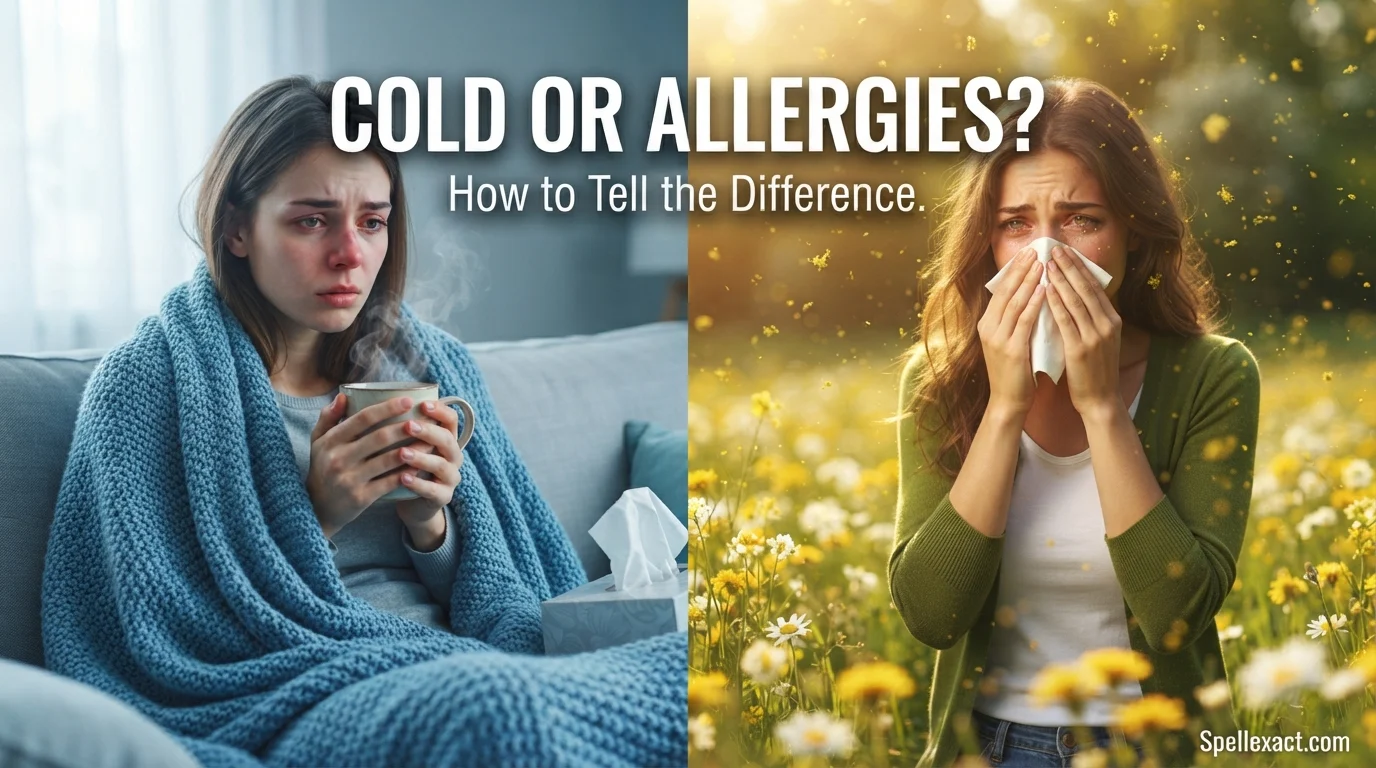
Your nose is running, you keep sneezing, and your throat feels scratchy. Is it a cold or allergies? Many people ask this question when the seasons change, because the two conditions share many symptoms. The quickest way to tell them apart is to look at how long symptoms last, whether you have a fever, and whether your eyes are itchy.
In this guide, you will learn the differences between a cold and allergies in simple English. You will see what causes each one, how each feels, and what usually helps. You will also find a comparison table, real example sentences, common mistakes, and answers to popular questions. By the end, you will know which clues to look for and when to talk to a doctor.
Quick Answer
A cold is a contagious viral infection that usually brings a sore throat, cough, and body aches and lasts about 7 to 10 days. Allergies happen when your immune system reacts to harmless things like pollen or dust. They cause itchy eyes and sneezing, do not cause a fever, and can last for weeks.
Why Do People Confuse a Cold and Allergies?
A cold and allergies affect the same area: your nose, throat, and sometimes your eyes. Both can make you sneeze, cough, and feel stuffy. Both can also make you feel tired and a little unwell.
Here are the main reasons people mix them up:
- Shared symptoms: A runny nose, sneezing, and congestion appear in both.
- Similar timing: Colds are common in autumn and winter. Allergies can also start at these times because of indoor dust, mold, and pet dander.
- Mild cases: A mild cold and mild allergies can feel almost the same on the first day.
The difference is the cause. A cold comes from a virus. Allergies come from your immune system overreacting.
What Is a Cold?
A cold, also called the common cold, is a mild infection of the nose and throat. Many different viruses can cause it, and rhinoviruses are the most common. You can catch it when someone coughs or sneezes near you, or when you touch a contaminated surface and then touch your face.
Typical signs of a cold:
- Symptoms that build up slowly over one to three days
- Sore or scratchy throat
- Runny nose, with mucus that may turn thick or yellow-green
- Cough
- Mild body aches or tiredness
- Sometimes a low fever, more often in children
Most colds get better on their own in about 7 to 10 days. A cough can last a little longer.
What Are Allergies?
An allergy happens when your immune system treats a harmless substance as a danger. These substances are called allergens. Common ones include pollen, dust mites, pet dander, and mold. When you breathe them in, your body releases chemicals such as histamine, which cause symptoms.
When this affects your nose and eyes, doctors call it allergic rhinitis. People in the UK often call the seasonal type hay fever.
Typical signs of allergies:
- Itchy, watery, or red eyes
- Itchy nose, throat, or ears
- Clear, thin, watery mucus
- Sneezing, often many times in a row
- Stuffy nose
- No fever and no body aches
Allergies are not contagious. Symptoms can last for weeks or months, for as long as you are around the trigger.
Cold vs Allergies: Comparison Table
| Feature | Cold | Allergies |
| Cause | Virus | Immune reaction to allergens |
| Contagious? | Yes | No |
| Start | Slowly, over 1–3 days | Quickly, right after exposure |
| Duration | About 7–10 days | Weeks or months, while exposed |
| Itchy eyes or nose | Rare | Very common |
| Fever | Sometimes, usually low | Never |
| Body aches | Often mild | Not typical |
| Sore throat | Common | Sometimes scratchy or itchy |
| Mucus | Can be thick and yellow-green | Usually clear and watery |
| Common treatment | Rest, fluids, pain relievers | Antihistamines, nasal sprays, avoiding triggers |
How Can You Tell if It’s a Cold or Allergies?
Ask yourself these simple questions:
- How long has it lasted? More than 10 days with no change points toward allergies.
- Are your eyes itchy? Itchy, watery eyes strongly suggest allergies.
- Do you have a fever or body aches? If yes, it is more likely a cold, or possibly flu.
- Did it start suddenly after a trigger? Symptoms right after cleaning, petting a cat, or walking outside in spring suggest allergies.
- Did anyone around you get sick? If people near you have similar symptoms, a cold is more likely.
When to Treat Each One
For a cold:
- Rest and drink plenty of fluids.
- Use saline nose drops or sprays to ease congestion.
- Gargle with warm salt water for a sore throat.
- Use over-the-counter pain or fever relievers as directed on the label.
Antibiotics do not work on colds because colds are caused by viruses.
For allergies:
- Avoid the trigger when you can, for example by keeping windows closed on high-pollen days.
- Wash bedding often in hot water to reduce dust mites.
- Ask a pharmacist about antihistamines or steroid nose sprays.
- See a doctor or allergy specialist if symptoms keep coming back.
When to see a doctor:
- Symptoms last more than 10 days without improving
- High fever
- Wheezing, chest tightness, or trouble breathing
- Severe sinus pain or swelling around the eyes
- Symptoms in a baby or a person with a weak immune system
This article is for general information and does not replace advice from a doctor or pharmacist.
12 Example Sentences
- “I’ve had a runny nose for three days, and now my throat hurts. I think I have a cold.”
- “My eyes are so itchy every spring. It must be allergies.”
- “She stayed home from school because she caught a cold.”
- “He sneezes whenever he visits his aunt’s house, so he may be allergic to her cat.”
- “My cold got worse on day two, then slowly got better.”
- “Do you have a cold or allergies? You don’t have a fever, but your eyes are red.”
- “My allergies get worse when the pollen count is high.”
- “Don’t shake hands. I have a cold, and I don’t want you to catch it.”
- “My symptoms have lasted a month, so it’s probably not a cold.”
- “The doctor said my stuffy nose came from a dust allergy.”
- “A cold usually goes away without special medicine.”
- “I take an allergy tablet every morning during hay fever season.”
Common Mistakes
- Thinking allergies are contagious. You cannot catch allergies from another person.
- Using antibiotics for a cold. They do not treat viruses.
- Judging only by mucus color. Colored mucus can happen with a cold, but color alone does not prove infection.
- Ignoring symptoms that last too long. A “cold” that never ends may be allergies or another condition.
- Assuming a fever means allergies. Allergies do not cause a fever.
- Saying “I have allergy.” Use “I have allergies” or “I have an allergy to pollen.”
Easy Memory Trick
Itchy means allergies. Achy means cold.
If your eyes and nose are itchy, think allergies. If your body is achy and you feel tired, think cold. You can also remember: a cold is Caught from someone; allergies are Activated by something.
American vs British English
The words “cold” and “allergies” are the same in both varieties, but some related words differ.
| Meaning | American English | British English |
| Blocked nose | stuffy nose | blocked nose |
| Seasonal pollen allergy | seasonal allergies | hay fever |
| Place to buy medicine | drugstore or pharmacy | chemist or pharmacy |
| Common pain reliever | acetaminophen | paracetamol |
| Allergy medicine | allergy medicine | antihistamine tablets |
Both varieties say “catch a cold” and “have a cold.”
Similar Words and Related Conditions
- Flu (influenza): A stronger viral illness with sudden high fever, body aches, and extreme tiredness.
- COVID-19: A viral illness that can look like a cold or flu. A test is the only reliable way to tell.
- Sinus infection (sinusitis): Inflamed sinuses that cause facial pressure and thick mucus, sometimes after a cold.
- Hay fever (allergic rhinitis): Allergies to pollen that affect the nose and eyes.
- Postnasal drip: Mucus running down the back of the throat, which can cause coughing in both colds and allergies.
- Asthma: A lung condition that can be triggered by allergens and causes wheezing.
Final Verdict
Choose “cold” when symptoms come with a sore throat, body aches, or a low fever and clear up within about 10 days. Choose “allergies” when your eyes and nose are itchy, there is no fever, and symptoms continue as long as you are near a trigger. If you are not sure, track your symptoms for a few days. If you are still unsure or you feel worse, ask a doctor.
Frequently Asked Questions
How do I know if I have a cold or allergies?
Check for itchy eyes, fever, and how long symptoms last. Itchy eyes with no fever and long-lasting symptoms suggest allergies. A sore throat, body aches, and improvement within 10 days suggest a cold.
Can allergies turn into a cold?
No. Allergies cannot turn into a cold because a cold is caused by a virus. However, allergy symptoms can make your nose and throat more irritated, so you may feel sick more easily.
How long does a cold last compared with allergies?
A cold usually lasts 7 to 10 days. Allergies can last for weeks or months, depending on how long you are exposed to the trigger.
Do allergies cause a sore throat?
They can, but it is usually a scratchy or itchy feeling caused by postnasal drip. A painful sore throat with fever is more typical of a cold or another infection.
Do allergies cause a fever?
No. A fever points to an infection such as a cold, the flu, or COVID-19.
Is yellow or green mucus a sign of a cold?
It often appears during a cold, but color alone cannot confirm the cause. Clear mucus is more common with allergies.
Can you have a cold and allergies at the same time?
Yes. Some people have allergies and catch a cold in the same season, which can make symptoms last longer and feel stronger.
When should I see a doctor?
See a doctor if symptoms last more than 10 days, you have a high fever, you have trouble breathing, or you notice wheezing or severe sinus pain.
Remember This
- A cold is caused by a virus and is contagious.
- Allergies are an immune reaction and are not contagious.
- Itchy eyes and no fever point to allergies.
- Body aches and a low fever point to a cold.
- Colds improve in about 7 to 10 days. Allergies can last much longer.
- See a doctor for trouble breathing, high fever, or symptoms that do not improve.
Conclusion
Telling a cold from allergies becomes easier when you look at the clues together: the cause, the timing, the type of mucus, and signs like itchy eyes or a fever. A cold is a short viral illness that you can pass to others. Allergies are a reaction to triggers around you, and they stay as long as the trigger does.
Pay attention to your body, track how long symptoms last, and use simple steps like rest, fluids, or allergy medicine when they fit. If something feels serious or does not improve, talk to a doctor or pharmacist. Knowing the difference helps you choose the right care and feel better sooner.

Andrew Anthony is a language enthusiast and content writer specializing in spelling mistakes, grammar, and English usage. He creates clear, practical, and well-researched guides that help readers improve their writing skills with confidence.