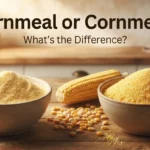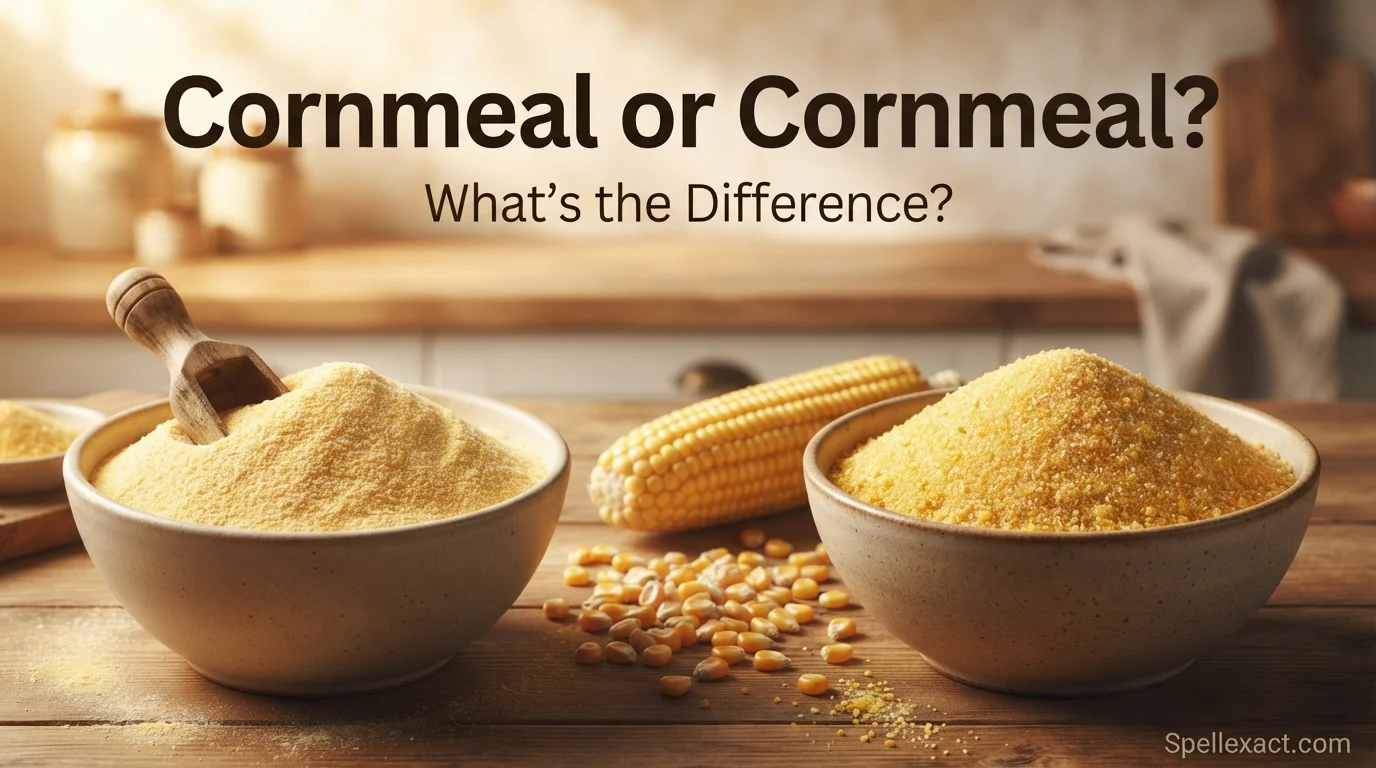
Have you ever stopped while writing a recipe and wondered whether to type cornmeal or corn meal? You are not alone. Both forms look correct, and both appear in recipes, grocery lists, and online articles. The short answer is that they mean the same thing: dried corn that has been ground into a coarse powder.
The real difference is spelling, not meaning. Cornmeal, written as one word, is the standard spelling in modern dictionaries and in most food writing. Corn meal, written as two words, is an older form that you may still see. This guide explains both spellings in simple English, shows you when to use each one, and gives clear examples so you can write with confidence. You will also learn how cornmeal differs from similar words like cornflour, cornstarch, polenta, and grits.
Quick Answer: Is It Cornmeal or Corn Meal?
Cornmeal is the correct and standard spelling. Corn meal, written as two words, means the same thing but is older and less common. Both describe dried corn ground into a fine, medium, or coarse powder. In recipes, headlines, and product labels, use the one-word form cornmeal to stay clear and consistent.
Why Do People Confuse Cornmeal and Corn Meal?
English has three ways to join words: as one word (closed), with a space (open), or with a hyphen. Many food words started as two words and slowly became one. Because this change happens over time, older books and some websites still show the two-word form.
People also get confused because other “meal” words follow different patterns:
- Oatmeal is one word.
- Bone meal and fish meal are usually two words.
- Wholemeal is one word in British English.
With no single rule, it is easy to guess wrong.
What Is Cornmeal (One Word)?
Cornmeal is a noun. It means dried corn that has been ground into a powder, usually coarser than flour. Cooks use it for cornbread, muffins, pancakes, and breading for fried foods.
It comes in different grinds and colors:
- Fine, medium, and coarse grind: Fine cornmeal gives a soft texture. Coarse cornmeal gives a crunchy, gritty texture.
- Yellow and white: Yellow cornmeal has a slightly stronger corn flavor. White cornmeal is milder.
- Stone-ground: This type often keeps part of the corn germ, so it has more flavor and spoils faster.
This is the form used by major dictionaries and most food brands.
What Is Corn Meal (Two Words)?
Corn meal has exactly the same meaning as cornmeal. It is simply the open form of the same compound noun. You may find it in older cookbooks, historical texts, and informal writing.
Nothing is wrong with the idea behind it, but today it can look outdated or like a typing slip. If you want your writing to look polished and professional, choose the one-word form.
Cornmeal vs. Corn Meal: Comparison Table
| Feature | Cornmeal | Corn meal |
| Spelling style | One word (closed compound) | Two words (open form) |
| Meaning | Dried corn ground into powder | Same meaning |
| Common today? | Yes, very common | Less common |
| Found in | Dictionaries, recipes, food labels | Older books, informal writing |
| Best for modern writing | Yes | Not recommended |
When Should You Use Each One?
Use cornmeal when you are:
- Writing recipes, menus, or shopping lists
- Creating product descriptions or food articles
- Writing school essays, emails, or reports
- Unsure which form to choose
Use corn meal only when you are:
- Quoting an older source exactly as it was written
- Following a style guide that specifically asks for it
For nearly everyone, the answer is simple: write cornmeal.
12 Examples of Cornmeal in Sentences
- I added one cup of cornmeal to the bread batter.
- She rolled the fish in cornmeal before frying it.
- Yellow cornmeal gives this muffin a golden color.
- The recipe calls for coarse cornmeal, not fine.
- He sprinkled cornmeal on the pan so the pizza would not stick.
- We bought a small bag of white cornmeal at the market.
- Stone-ground cornmeal tastes richer than regular cornmeal.
- My grandmother made cornmeal pancakes every Sunday.
- Store your cornmeal in a cool, dry place.
- Mix the cornmeal with warm water to make a thick paste.
- This cornmeal crust is crisp on the outside and soft inside.
- The old cookbook used the spelling “corn meal,” but today we write cornmeal.
Common Mistakes to Avoid
- Splitting the word in modern writing. Writing “corn meal” in a recipe can look careless.
- Mixing both spellings in one text. Pick one form and keep it the same throughout.
- Confusing cornmeal with cornstarch. They are different products and cannot be swapped one for one.
- Confusing cornmeal with cornflour in British recipes. In the UK, cornflour usually means what Americans call cornstarch.
- Hyphenating it. “Corn-meal” is not standard.
Easy Memory Trick
Think of oatmeal. Nobody writes “oat meal,” so you can treat cornmeal the same way. Both are common kitchen grain foods, and both are one word. If you can spell oatmeal, you can spell cornmeal.
American English vs. British English
Both American and British writers use the one-word spelling cornmeal. The bigger difference is vocabulary, not spelling:
- American English: Cornmeal is the everyday word. “Corn flour” is sometimes used for very finely ground corn, while cornstarch is the pure starch.
- British English: Cornmeal is understood, but “maize meal” is also common, especially in parts of Africa. “Cornflour” in British recipes usually means cornstarch.
Always check the recipe’s country of origin before substituting ingredients.
Similar Words and Related Terms
- Cornstarch: A fine white starch used to thicken sauces and soups. It is not ground whole corn.
- Cornflour: In the UK, usually cornstarch. In some other places, it means finely ground corn.
- Corn flour: In the US, a very fine powder made from whole corn.
- Polenta: An Italian dish made by cooking coarse cornmeal. The word also names the ground corn used for it.
- Grits: A Southern American dish made from coarsely ground corn, often boiled until creamy.
- Masa harina: Corn flour made from corn treated with limewater, used for tortillas and tamales.
- Maize meal: Another name for ground corn, common in British and African English.
Final Verdict
Cornmeal is the right choice. It is the standard, modern, one-word spelling. Corn meal means the same thing, but it is older and less common, so it is best avoided unless you are quoting an older source. When in doubt, go with cornmeal.
Frequently Asked Questions
Is it cornmeal or corn meal?
The standard spelling is cornmeal, written as one word. Corn meal is an older two-word form with the same meaning, but it is less common today.
Are cornmeal and corn meal the same thing?
Yes. They describe the same food: dried corn ground into a powder. Only the spelling is different.
What is cornmeal made of?
Cornmeal is made from dried corn kernels that are ground into a fine, medium, or coarse texture. Some types include the germ and some do not.
Is cornmeal the same as cornstarch?
No. Cornmeal is ground whole corn, while cornstarch is a pure starch taken from the corn kernel. Cornstarch thickens sauces, and cornmeal adds texture and flavor.
Is cornmeal the same as polenta?
Not exactly. Polenta is an Italian dish, and the word can also mean the coarse ground corn used to make it. Coarse cornmeal can often be used as a substitute.
Can I use cornmeal instead of flour?
Sometimes. Cornmeal has no gluten, so it does not rise or hold together like wheat flour. Recipes usually mix the two, as in cornbread.
What is cornflour in British English?
In the UK, cornflour usually means cornstarch, the fine white thickener. It is not the same as American cornmeal.
Remember This
- Cornmeal (one word) is the standard spelling.
- Corn meal (two words) is older and less common.
- Both mean ground dried corn.
- Think of oatmeal to remember the one-word form.
- Cornmeal is not the same as cornstarch or cornflour.
Conclusion
The cornmeal or corn meal question has a simple answer: the meaning is the same, but the spelling is not equally accepted. Cornmeal is the standard one-word form used in dictionaries, cookbooks, and on food labels. Corn meal is an older form that now looks unusual in everyday writing.
Next time you write a recipe, a shopping list, or an essay, choose cornmeal and use it the same way every time. If you cook with different corn products, check labels and regional names so you do not mix up cornmeal, cornstarch, and cornflour.

Caleb Carter is a passionate language enthusiast and content writer specializing in spelling mistakes, grammar, and vocabulary. He creates clear, practical guides that help readers improve their writing skills and communicate confidently every day.