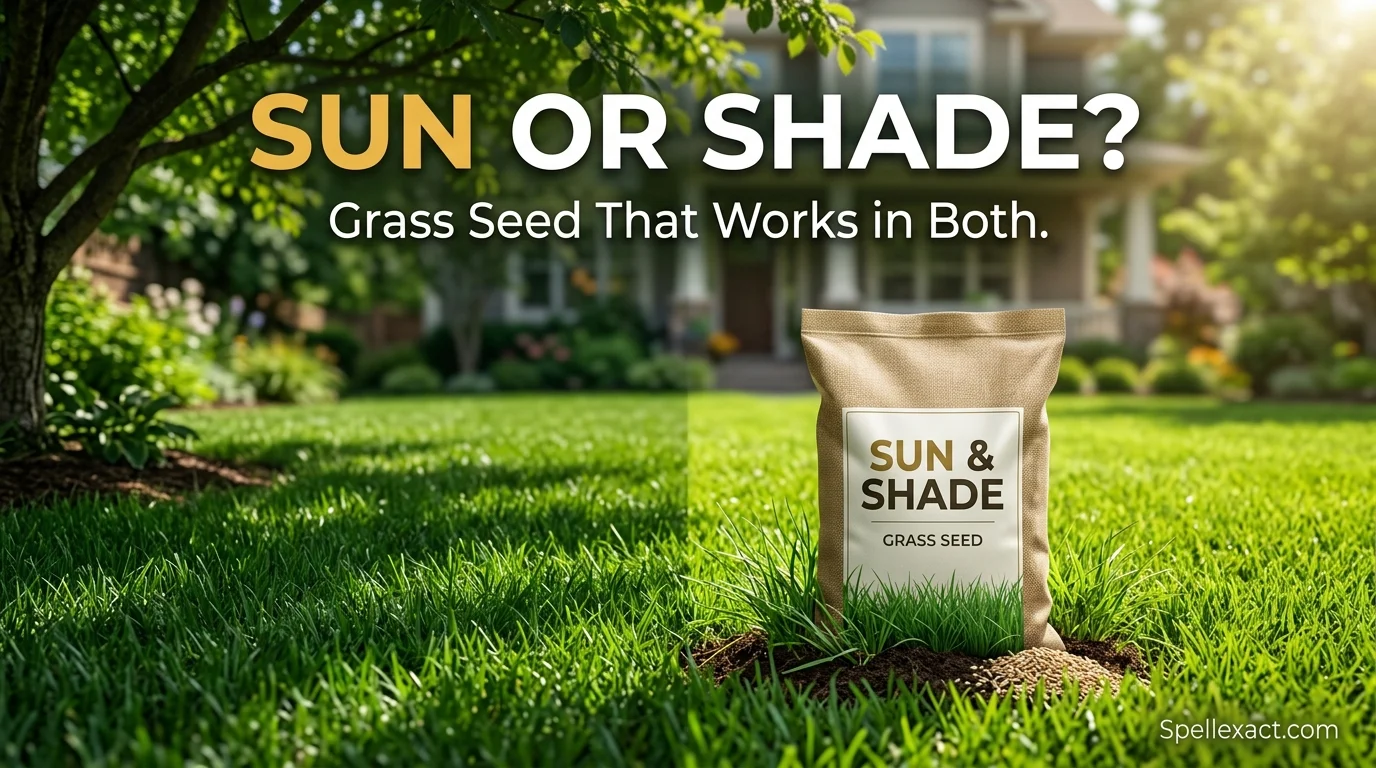
Choosing grass seed is easy when your yard has one kind of light. It gets harder when one part of the lawn bakes in the afternoon sun and another sits under a tree all day. Ace Mixed Sun or Shade Grass Seed is made for that kind of yard. It is a blend of several grasses, so one bag can cover both bright and partly shaded areas.
Shoppers still ask the same questions. What is in the bag? Does “sun or shade” mean it grows anywhere? How much seed do you need? This guide answers those questions in plain English, explains the grasses in the mix, and shows you how to use the seed so your lawn has a fair chance to grow thick and green.
Quick Answer
Ace Mixed Sun or Shade Grass Seed is a blend of cool-season grasses, such as tall fescue, Kentucky bluegrass, and creeping red fescue, made for lawns with both sunny and partly shaded areas. Use it in spring or fall to patch bare spots, overseed thin grass, or start a new lawn. It is not meant for deep, dark shade.
Why Do People Get Confused About This Seed?
Three things cause most of the confusion:
- “Sun or shade” sounds unlimited. The label means the blend handles a range of light, from full sun to moderate shade. It does not mean grass can grow in total darkness.
- Bag contents differ. Some Ace versions list tall fescue, Kentucky bluegrass, and creeping red fescue. Others list perennial ryegrass, creeping red fescue, Kentucky bluegrass, and annual ryegrass. You can check the current details on the official Ace Mixed Sun or Shade Grass Seed 3 lb page, and always read the label on the bag you buy.
- Regions differ. Ace sells versions labeled for the North and for the Transition Zone, the middle band of the United States where it is too cold for some grasses and too hot for others.
What Are Sun-Loving Grasses?
Sun-loving grasses need several hours of direct light each day to grow thick. In this kind of blend, Kentucky bluegrass and perennial ryegrass play that role. Bluegrass spreads slowly and fills gaps. Ryegrass sprouts fast, which helps hold the soil while slower grasses catch up.
In the sunny parts of your yard, these grasses do most of the work. In heavy shade, they tend to get thin and weak.
What Are Shade-Tolerant Grasses?
Shade-tolerant grasses can survive on less light, such as the dappled light under a tree or beside a fence. Creeping red fescue is the best-known example. Tall fescue also handles some shade and is known for being tough and drought resistant.
“Shade tolerant” means the grass can live with less light, not that it prefers darkness. Most lawn grasses need at least a few hours of sun or bright, filtered light.
How Do the Grasses Compare?
| Grass | Best Light | Main Strength | What It Adds to the Mix |
| Kentucky bluegrass | Full sun to light shade | Dense, soft, self-repairing lawn | Thickness and a rich green color |
| Perennial ryegrass | Full sun | Fast germination | Quick cover while other seeds grow |
| Tall fescue | Sun to moderate shade | Tough, drought tolerant | Strength in dry or busy spots |
| Creeping red fescue | Partial to moderate shade | Thrives on less light | Coverage under trees and near buildings |
When Should You Use Each Type?
Choose a sun-focused seed when your whole lawn gets six or more hours of direct light. A shade-focused seed works better when most of the area stays shaded for much of the day.
For yards with changing light conditions, a mixed sun or shade seed like this one can provide a more flexible option. That is common near houses, fences, garages, and trees.
Examples of When Ace Mixed Sun or Shade Grass Seed Makes Sense
- A front lawn with a maple tree that shades one side in the afternoon
- Bare patches left by a dog’s regular path
- A thin lawn you want to overseed in early fall
- A new 2,000-square-foot backyard, since the 3 lb bag is listed to cover about 2,400 square feet
- A strip beside a fence that gets only half a day of sun
- Grass under a tree after you trim some low branches to let in more light
- A medium lawn of about 5,000 square feet, since the 7 lb bag is listed to cover about 5,600 square feet
- The spot where an old shed or play set stood
- Worn grass between a house and a garage where the sun moves across the day
- A rental home yard with patchy light and bare dirt
- A large property of 10,000 square feet or more, using the 25 lb bag listed for about 12,500 square feet
- A lawn recovering from foot traffic, where tall fescue helps with toughness
Examples where it is a poor fit include a yard under dense evergreens that never sees light, and warm-climate lawns such as Bermuda or zoysia, which need different seed.
Common Mistakes to Avoid
- Planting in midsummer. Cool-season grasses grow best in spring and fall. Early fall is often the easiest time.
- Skipping soil contact. Seed sitting on thick thatch or hard soil often fails. Loosen the surface and rake lightly.
- Letting the seed dry out. Keep the top layer of soil moist until the grass is established. The seed can sprout in about 7 to 14 days, but slower grasses take longer.
- Expecting grass in deep shade. Trim branches or choose a shade-specific plan if light is very low.
- Ignoring the label. Check the bag for grass types, region, and coverage before you buy.
- Mowing too early or too short. Wait until the new grass is tall enough, and never cut off more than about one third of the blade at once.
Memory Trick
Think of it as a mixed yard, mixed seed. If your light changes across the lawn, your seed should too. One grass is for one kind of light, and a blend is for many.
American vs. British English
The product is sold in the United States, so the label uses American terms. Readers in other countries may know the same ideas by different names:
| American English | British English |
| Grass seed | Lawn seed or grass seed |
| Yard | Garden |
| Overseeding | Oversowing |
| Fall | Autumn |
| Sod | Turf |
| Square feet and pounds | Square meters and kilograms |
Similar Words and Terms
- Overseeding: spreading new seed over an existing lawn to thicken it
- Reseeding: planting seed again in areas where grass failed
- Cool-season grass: grass that grows best in mild spring and fall weather
- Warm-season grass: grass that grows best in hot summers
- Coated seed: seed with a layer added to hold water or nutrients. Some Ace sun and shade listings describe their seed as not coated.
- Germination: the stage when a seed sprouts
Final Verdict
Ace Mixed Sun or Shade Grass Seed is a sensible choice for ordinary home lawns where light is uneven and the climate suits cool-season grass. It works well for patching, overseeding, and starting small to medium lawns.
It is not a miracle for deep shade or hot southern climates. Match the bag to your region, prepare the soil, water steadily, and the blend can do its job.
Frequently Asked Questions
What grasses are in Ace Mixed Sun or Shade Grass Seed?
Several Ace versions list tall fescue, Kentucky bluegrass, and creeping red fescue. Others list perennial ryegrass, creeping red fescue, Kentucky bluegrass, and annual ryegrass. Check the bag for the exact mix.
How much area does one bag cover?
Ace lists about 800 square feet per pound. The 3 lb bag is listed for about 2,400 square feet, the 7 lb bag for about 5,600, and the 25 lb bag for about 12,500.
When is the best time to plant it?
Spring and fall are the recommended seasons. Early fall is often best because the soil is warm and the air is cooler.
How long does it take to sprout?
One Ace listing says it germinates in 7 to 14 days. Weather, soil, and watering can make it faster or slower.
Can it grow in full shade?
It is made for sun through moderate shade. If your lawn gets almost no light, even shade-tolerant grass will struggle.
Is it good for overseeding a thin lawn?
Yes. Ace describes it as suitable for overseeding existing lawns, repairing bare patches, and starting new lawns.
Is it for northern or southern lawns?
It is a cool-season blend. Ace sells versions labeled for the North and the Transition Zone. It is not a match for warm-season southern lawns.
Does it need a lot of water?
New seed needs steady moisture to sprout. Once the grass is established, the blend is listed as drought tolerant, though lawns still need regular watering in dry weather.
Remember This
- It is a blend for lawns with mixed light, not a cure for deep shade.
- Read the label to confirm the grass types and region.
- Plant in spring or fall.
- Keep the new seed moist until it sprouts and takes root.
- Match the bag size to your lawn area.
Conclusion
Uneven light is one of the most common lawn problems, and a mixed seed is a practical answer. Ace Mixed Sun or Shade Grass Seed combines grasses that like sun with grasses that tolerate shade, so each part of your yard has a grass that suits it.
Good results still depend on your habits. Pick the right season, prepare the soil, spread the seed evenly, and keep it watered. With a little patience, a patchy yard can become a thick, even lawn.

Andrew Anthony is a language enthusiast and content writer specializing in spelling mistakes, grammar, and English usage. He creates clear, practical, and well-researched guides that help readers improve their writing skills with confidence.