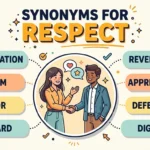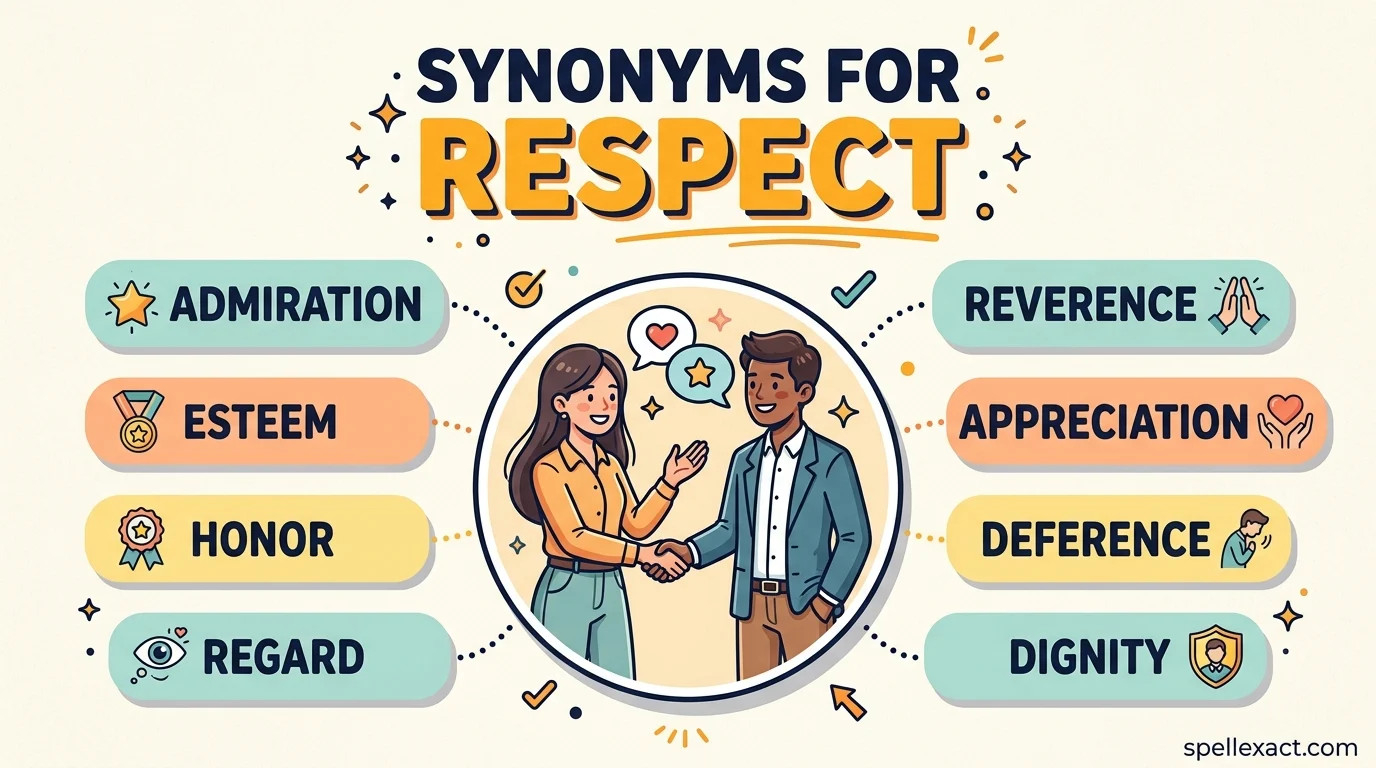
Synonyms for respect help express how we value others, recognize their qualities, and appreciate their actions in different situations. Admiration, regard, appreciation, praise, and esteem show that we value another person’s qualities or achievements. Stronger feelings may involve reverence, adoration, veneration, or worship, while deference, honor, homage, and approbation express recognition or approval.
Choosing the right word helps explain whether we value someone’s character, recognize their achievements, or appreciate their presence. Estimation, interest, favor, affection, and love can also describe how we view or feel about another person.
Respect sometimes overlaps with personal feelings, attraction, and enjoyment. Enthusiasm, fondness, taste, preference, enjoyment, relish, and like describe different ways people respond positively to someone or something. Delight, wonder, amazement, wonderment, and awe express strong feelings of surprise or appreciation.
Meanwhile, infatuation, fancy, passion, devotion, and attachment describe powerful personal interests or emotional connections. These words are related to respect in certain contexts, but they do not always mean respect itself. For example, hero worship, idolatry, adulation, lionization, and partiality can describe excessive admiration, while bias and prejudice may affect whether someone receives fair treatment.
The meaning of respect also depends on context and how a word is used. Account can refer to consideration or regard, while use may relate to the practical use of something rather than respect directly. Props is an informal term for giving someone credit or recognition, and acclamation refers to enthusiastic public approval.
Appetite can describe a strong desire or interest, while shine may suggest excellence or distinction that attracts admiration. When writing about respect, it is helpful to choose words that match the situation rather than treating every synonym as an exact replacement. Understanding these differences makes writing more precise and helps readers distinguish genuine esteem from simple liking, strong affection, or excessive admiration.
Quick Answer: What Is Another Word for Respect?
The closest synonym for respect is often esteem or regard when describing a positive opinion of someone. Other useful choices include:
- Admiration: Respect for someone’s impressive qualities or achievements.
- Deference: Respect for someone’s experience, authority, or judgment.
- Reverence: Deep, solemn respect.
- Veneration: Profound respect for a person or tradition.
- Honor: Respect or recognition for someone’s character or service.
- Appreciation: Recognition of someone’s value, effort, or contribution.
- Consideration: Thoughtful attention to another person’s needs and feelings.
For example, you might say, “I have great esteem for my teacher,” “We admire her courage,” or “The team showed deference to the expert’s judgment.”
What Does Respect Mean?
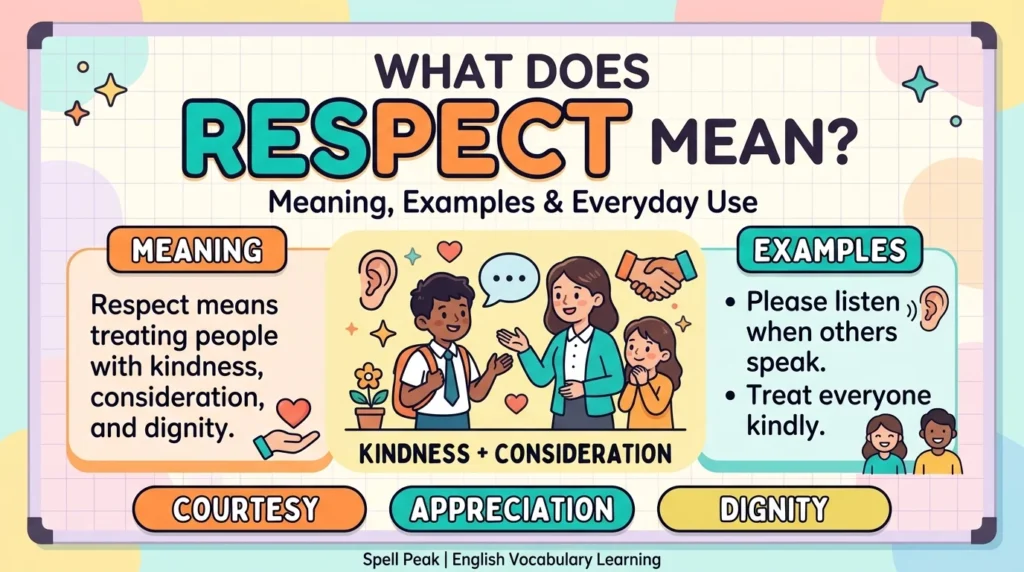
Respect is an attitude or action that recognizes the worth, rights, abilities, or importance of a person, group, belief, or thing. It can describe how you feel about someone, how you treat them, or how you respond to their experience and opinions.
The meaning of respect changes with context:
- Personal respect: Recognizing another person’s character, feelings, or boundaries.
- Professional respect: Valuing someone’s expertise, contribution, or judgment.
- Deep respect: Feeling profound admiration for a person, belief, or tradition.
- Respectful behavior: Treating others fairly, thoughtfully, and politely.
Understanding these differences helps you choose the most accurate alternative instead of replacing respect with a word that only has a related meaning.
30 Synonyms for Respect With Meanings and Examples
The following list includes direct synonyms, context-specific alternatives, and common expressions that communicate respect. Each entry explains how closely the word matches respect and where it works best.
1. Esteem
Meaning: A high opinion of someone’s character, abilities, or achievements.
Example: The community holds the teacher in high esteem.
Best used when: Describing the value you place on someone’s qualities or accomplishments.
Esteem is one of the closest synonyms for respect when you mean having a positive opinion of another person.
2. Regard
Meaning: A feeling of respect, consideration, or admiration.
Example: She has great regard for her former supervisor.
Best used when: Discussing personal relationships, professional opinions, or the way someone views another person.
The phrase high regard is a natural alternative to great respect.
3. Admiration
Meaning: A feeling of approval or appreciation for someone’s qualities, actions, or achievements.
Example: His courage earned the admiration of his colleagues.
Best used when: Emphasizing qualities or accomplishments you find impressive.
Admiration overlaps with respect, but it places greater emphasis on what makes someone worthy of praise.
4. Deference
Meaning: Respect shown by giving weight to another person’s experience, authority, or judgment.
Example: The team showed deference to the senior engineer’s expertise.
Best used when: Discussing professional settings, established authority, or experienced judgment.
Deference does not necessarily mean agreement. It means acknowledging someone’s standing or knowledge.
5. Reverence
Meaning: Deep and often solemn respect for someone or something important.
Example: Visitors entered the memorial with reverence.
Best used when: Writing about sacred beliefs, traditions, historical figures, or significant places.
Reverence expresses a stronger and more solemn feeling than ordinary respect.
6. Veneration
Meaning: Profound respect, often directed toward a revered person or tradition.
Example: The historical leader was remembered with veneration.
Best used when: Describing deep cultural, religious, or historical respect.
Veneration is more formal and intense than respect, so it is not suitable for every everyday situation.
7. Honor
Meaning: Respect, esteem, or recognition given because of someone’s character, achievements, or service.
Example: The school held a ceremony to honor its retiring principal.
Best used when: Discussing awards, accomplishments, public service, and formal recognition.
Honor can be a noun or a verb. As a verb, it often means showing respect through a specific action.
8. Respectfulness
Meaning: The quality of behaving in a respectful and considerate way.
Example: Her respectfulness during the discussion impressed the panel.
Best used when: Describing a person’s attitude, manners, or conduct.
Unlike esteem or admiration, respectfulness focuses on how someone behaves rather than the opinion another person holds of them.
9. Appreciation
Meaning: Recognition of the value, effort, qualities, or contribution of someone or something.
Example: The manager expressed appreciation for the team’s hard work.
Best used when: Thanking someone or acknowledging their contribution.
Appreciation is a related alternative rather than a direct synonym in every context. It is especially appropriate when respect includes gratitude.
10. Consideration
Meaning: Thoughtful attention to another person’s feelings, needs, or circumstances.
Example: He showed consideration for his coworkers by listening to their concerns.
Best used when: Describing thoughtful and respectful behavior.
Consideration focuses on how you treat others, rather than how highly you regard them.
11. Courtesy
Meaning: Polite and respectful behavior toward others.
Example: The receptionist treated every visitor with courtesy.
Best used when: Discussing manners, customer service, professional communication, or everyday interactions.
Courtesy is one way to demonstrate respect, although politeness does not always mean a person feels deep admiration.
12. Homage
Meaning: A public or formal expression of respect, honor, or admiration.
Example: The exhibition paid homage to the artists who shaped the movement.
Best used when: Writing about tributes, memorials, ceremonies, or creative works that recognize someone’s influence.
Homage describes an expression of respect, not a general feeling in every situation.
13. Tribute
Meaning: An act, speech, or presentation that expresses admiration, gratitude, or respect.
Example: Her colleagues organized a tribute to celebrate her career.
Best used when: Discussing commemorations, retirement celebrations, speeches, or public acknowledgments.
A tribute is something people offer to show respect; it is not a direct substitute for the word in every sentence.
14. Admire
Meaning: To regard someone or something with approval, appreciation, or respect.
Example: I admire her honesty and determination.
Best used when: You want to express respect for someone’s positive qualities or achievements.
Admire is a useful verb synonym when the focus is on qualities you find impressive.
15. Revere
Meaning: To feel deep respect for someone or something.
Example: Many people revere the civil rights leader for his courage.
Best used when: Describing profound respect for influential people, traditions, or beliefs.
Revere is the verb form associated with reverence and conveys more intensity than ordinary admiration.
16. Venerate
Meaning: To regard someone or something with profound respect.
Example: The community continues to venerate its founding leaders.
Best used when: Discussing respected historical figures, religious leaders, or longstanding traditions.
Venerate is a formal verb and is best reserved for contexts where the respect is particularly deep.
17. Value
Meaning: To consider someone or something important or worthwhile.
Example: A good manager values every team member’s contribution.
Best used when: Expressing respect for someone’s ideas, work, opinions, or role.
Value is a context-specific alternative to respect. It emphasizes recognizing importance rather than necessarily feeling admiration.
18. Prize
Meaning: To value something highly.
Example: She prizes the advice she received from her mentor.
Best used when: Expressing how much you value advice, trust, relationships, or personal qualities.
As a verb, prize can convey high regard. It is less common as a direct replacement for respect when discussing how people should treat one another.
19. Cherish
Meaning: To care for someone or something deeply and hold it dear.
Example: He cherishes the lessons he learned from his grandfather.
Best used when: Discussing relationships, memories, values, or meaningful experiences.
Cherish is more emotional than respect. Use it when affection and personal importance are central to the sentence.
20. Treasure
Meaning: To value someone or something greatly.
Example: She treasures the trust her friends have placed in her.
Best used when: Expressing deep personal value or appreciation.
Like cherish, treasure is a related alternative rather than an exact synonym for every meaning of respect.
21. Appreciate
Meaning: To recognize the value, importance, or quality of someone or something.
Example: I appreciate your honesty and willingness to help.
Best used when: Expressing recognition, gratitude, or respect for someone’s contribution.
Appreciate is particularly useful when respect is connected to gratitude or acknowledgment.
22. Acknowledge
Meaning: To recognize or accept the existence, importance, or validity of something.
Example: The director acknowledged the team’s contribution to the project.
Best used when: Recognizing someone’s effort, expertise, rights, or achievements.
Acknowledgment can demonstrate respect, but it does not always imply admiration or a high opinion.
23. Recognize
Meaning: To identify or acknowledge the importance, value, or achievement of someone or something.
Example: The organization recognized her years of dedicated service.
Best used when: Discussing accomplishments, contributions, or someone’s abilities.
Recognize is a contextual alternative when respect means acknowledging merit or importance.
24. Heed
Meaning: To pay careful attention to advice, warnings, wishes, or instructions.
Example: The team heeded the expert’s advice before making a decision.
Best used when: Explaining how someone demonstrates respect by taking another person’s words seriously.
Heed is not a general synonym for respect. It is useful when respect is expressed through attention to advice or warnings.
25. Observe
Meaning: To follow or comply with a rule, custom, agreement, or practice.
Example: Visitors are expected to observe the site’s cultural traditions.
Best used when: Discussing rules, customs, traditions, or formal requirements.
In expressions such as observe the rules or observe a tradition, the word can communicate respect through appropriate conduct.
26. Defer To
Meaning: To accept or give priority to another person’s judgment, knowledge, or authority.
Example: I will defer to the specialist’s judgment on this technical question.
Best used when: Acknowledging expertise or allowing someone with greater knowledge to make a decision.
Defer to is a verb phrase that expresses a specific form of respect, not a universal replacement for the noun.
27. Look Up To
Meaning: To admire and respect someone, often because of their character, achievements, or example.
Example: Many young athletes look up to their coaches.
Best used when: Discussing role models, mentors, family members, or influential people.
This natural expression works well in everyday English, especially when describing personal admiration.
28. Think Highly Of
Meaning: To have a favorable opinion of someone.
Example: I think highly of colleagues who keep their promises.
Best used when: Expressing a positive opinion in conversational or professional writing.
This phrase is close to hold in high regard. It emphasizes your opinion of a person rather than the way you behave toward them.
29. Hold in High Esteem
Meaning: To regard someone with great respect and admiration.
Example: The university holds the researcher in high esteem.
Best used when: Writing about professional achievements, leadership, expertise, or personal character.
This is a common and natural expression of respect. It is a phrase rather than a single-word synonym.
30. Pay Respect To
Meaning: To express respect, often through a deliberate action, visit, statement, or ceremony.
Example: The family visited the memorial to pay respect to those who had served their country.
Best used when: Discussing memorials, ceremonies, formal visits, or expressions of recognition.
Pay respect to describes showing respect in a particular way. It is not interchangeable with every use of the noun respect.
Respect Synonyms: Comparison Table
Use this table to find an alternative based on the meaning you want to express.
| Word or phrase | Main meaning | Best context |
| Esteem | High opinion of someone | Character and achievements |
| Regard | Respectful opinion | Personal and professional relationships |
| Admiration | Appreciation of impressive qualities | Accomplishments and character |
| Deference | Respect for expertise or authority | Formal or professional situations |
| Reverence | Deep, solemn respect | Sacred or significant subjects |
| Veneration | Profound respect | Religious or historical contexts |
| Honor | Respect or recognition | Service, awards, and achievements |
| Respectfulness | Respectful behavior | Personal qualities and manners |
| Appreciation | Recognition of value or effort | Gratitude and contributions |
| Consideration | Thoughtfulness toward others | Relationships and conduct |
| Courtesy | Polite behavior | Everyday interactions |
| Homage | Formal expression of respect | Tributes and commemorations |
| Admire | To regard with respect or approval | Qualities and accomplishments |
| Revere | To feel deep respect | Influential figures and traditions |
| Value | To consider important | Ideas, people, and contributions |
| Cherish | To hold dear | Relationships and memories |
| Appreciate | To recognize value | Gratitude and acknowledgment |
| Acknowledge | To recognize importance | Contributions and achievements |
| Heed | To pay attention to advice | Instructions and warnings |
| Defer to | To give weight to another’s judgment | Expertise and decision-making |
| Look up to | To admire and respect | Role models and mentors |
| Think highly of | To have a favorable opinion | Everyday and professional writing |
How to Choose the Best Synonym for Respect
The best word depends on your intended meaning, audience, and tone. Before replacing respect, ask whether you are describing a feeling, a positive opinion, or an action.
Formal Synonyms for Respect
For academic writing, professional communication, or formal statements, consider:
- Esteem: The organization holds her in high esteem.
- Regard: We have great regard for his professional judgment.
- Deference: The team showed deference to the expert’s advice.
- Recognition: Her contribution received formal recognition.
- Honor: The institution honored her years of service.
These alternatives work well in formal settings, but they are not interchangeable in every sentence. For example, recognition focuses on acknowledgment, while deference focuses on how someone responds to another person’s standing or judgment.
Words for Deep Respect
When ordinary respect is not strong enough, these words can express a more profound feeling:
- Reverence: They approached the memorial with reverence.
- Veneration: The community treated the revered figure with veneration.
- Revere: Many people revere her for her courage.
- Admiration: We felt admiration for his determination.
- Homage: The concert paid homage to a legendary musician.
Use reverence and veneration carefully because they suggest an unusually deep level of respect.
Simple Alternatives for Everyday English
In conversations, messages, and ordinary writing, these options often sound natural:
- Regard: I have great regard for her.
- Admire: I admire the way he treats people.
- Appreciate: I appreciate your honesty.
- Value: We value your opinion.
- Look up to: She looks up to her older sister.
If you are searching for another word for respect in an everyday sentence, choose the alternative that preserves your original meaning.
Words That Describe a Respectful Person
Sometimes you need an adjective to describe someone rather than a synonym for the noun respect.
- Respectful: He remained respectful throughout the disagreement.
- Considerate: She is considerate of other people’s feelings.
- Courteous: The staff were courteous and helpful.
- Polite: He was polite to everyone at the meeting.
- Thoughtful: She gave a thoughtful response to his concerns.
These are useful words for describing a respectful person, but they describe qualities or behavior rather than serving as direct noun synonyms.
Respect vs. Admiration: What Is the Difference?
Respect and admiration are closely related, but they do not mean exactly the same thing.
| Respect | Admiration |
| Recognizes someone’s rights, worth, abilities, or position | Appreciates someone’s impressive qualities or achievements |
| Can exist without personal approval or affection | Usually involves a positive feeling or evaluation |
| Example: I respect her right to disagree with me. | Example: I admire her courage in speaking up. |
You can respect someone without admiring every aspect of their character. Likewise, you may admire a person’s talent while disagreeing with their choices.
Respect vs. Esteem
Respect has a broad meaning. It can describe recognizing rights and boundaries, treating others fairly, or valuing someone’s experience.
Esteem usually refers to a high opinion of someone’s character, abilities, or achievements.
For example, you can respect every person’s right to express an opinion while holding one speaker in particularly high esteem because of their knowledge and integrity.
Common Mistakes When Choosing Respect Synonyms
1. Using Reverence in Ordinary Situations
Reverence communicates deep, often solemn respect. Saying “I have reverence for my coworker’s punctuality” may sound exaggerated. Appreciation or admiration would usually be more natural.
2. Confusing Respect With Politeness
Politeness involves good manners. Respect can also involve recognizing another person’s rights, dignity, boundaries, or abilities. Someone can be polite without feeling deep admiration for another person.
3. Treating Admiration and Respect as Identical
Admiration focuses on qualities or achievements that impress you. Respect may involve accepting someone’s rights or treating them fairly, even if you do not particularly admire them.
4. Using Deference When You Mean Agreement
Deference means giving weight to another person’s experience, position, or judgment. It does not automatically mean agreeing with everything they say.
5. Replacing Respect With Appreciation in Every Sentence
Appreciation often includes gratitude or recognition of effort. For example, “I appreciate your help” is natural, while “I appreciation your help” is grammatically incorrect. More importantly, appreciation and respect emphasize different things, so choose the word that fits your intended meaning.
Respect Antonyms: What Is the Opposite of Respect?
Learning the opposite of respect can help you understand its meaning more clearly. Common respect antonyms include:
- Disrespect: A lack of respect or behavior that shows disregard.
- Contempt: A feeling that someone or something is unworthy of consideration.
- Disdain: A feeling of strong dislike or low regard.
- Scorn: Open contempt or ridicule.
- Rudeness: Impolite or inconsiderate behavior.
- Dishonor: A loss or absence of honor.
The most direct opposite of respect is disrespect. Other alternatives are more specific: contempt and disdain describe negative attitudes, while rudeness describes behavior.
Frequently Asked Questions
1. What is another word for respect?
Common alternatives include esteem, regard, admiration, deference, and reverence. Esteem and regard are especially useful when you mean having a high opinion of someone.
2. What is the closest synonym for respect?
Esteem and regard are among the closest synonyms when respect means a positive opinion of someone. When it refers to considerate behavior, consideration or courtesy may be more appropriate.
3. What are some formal synonyms for respect?
Formal alternatives include esteem, deference, reverence, and regard. Use deference when acknowledging someone’s experience or authority and esteem when describing a high opinion of their character or abilities.
4. What are simple words that mean respect?
Useful alternatives include regard, esteem, honor, and admiration. For everyday sentences, verbs such as value and admire may also work, depending on the intended meaning.
5. What is the difference between respect and admiration?
Respect can mean recognizing someone’s rights, worth, or abilities. Admiration focuses more on qualities or achievements you find impressive. You can respect a person’s right to disagree without admiring their opinion.
6. What are positive words associated with respect?
Positive words associated with respect include esteem, admiration, appreciation, consideration, courtesy, and dignity. Some describe feelings, while others describe respectful conduct or personal worth.
7. What are words that describe a respectful person?
Respectful, considerate, courteous, polite, and thoughtful describe someone who treats others with care and consideration. Choose the adjective that best reflects the person’s behavior.
8. What is the opposite of respect?
The most direct opposite is disrespect. Other words include contempt, disdain, scorn, and rudeness. The best choice depends on whether you mean a lack of respect, a negative attitude, or impolite behavior.
Conclusion
The best synonyms for respect depend on what you want to communicate. Esteem and regard describe a high opinion of someone, admiration highlights impressive qualities, reverence expresses deep respect, and deference recognizes another person’s experience or authority. Words such as appreciation, consideration, and courtesy describe related ideas that may fit certain contexts better.
When choosing another word for respect, consider the sentence, the audience, and the feeling you want to express. The right alternative makes your writing more accurate, natural, and meaningful.

Liam Noah is a passionate language writer at SpellExact, specializing in spelling mistakes, grammar, word confusion, and American vs. British English. He creates clear, practical content that helps readers write and communicate with confidence.