Have you ever typed “compair” and wondered whether it was the correct spelling of the word? You are not alone. This is a common spelling mistake because “compair” sounds very similar to “compare,” especially when the word is spoken quickly.
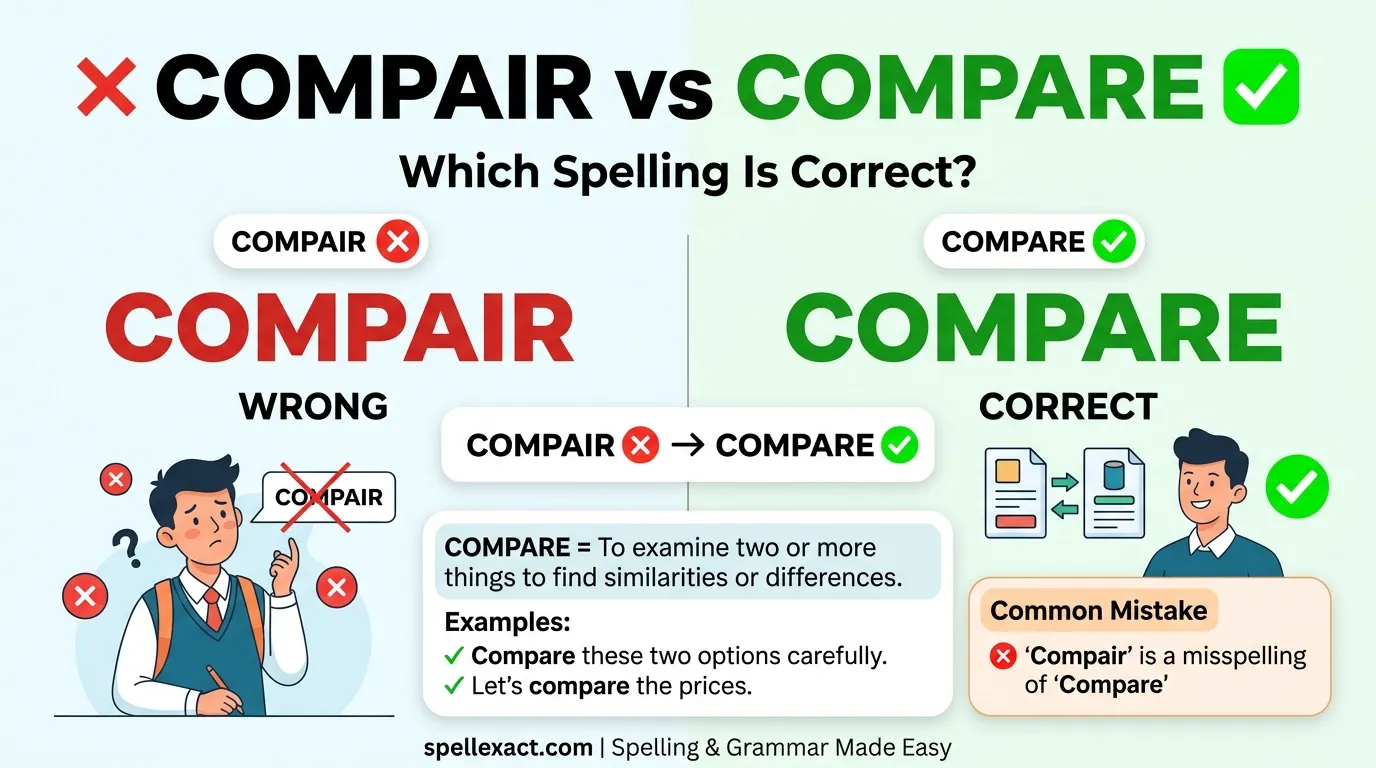
The good news is that the answer is simple: compare is the correct spelling in standard English, while compair is generally an incorrect spelling when you mean the verb “compare.” In this guide, you’ll learn the difference between compair vs compare, their meanings, examples, common mistakes, and an easy way to remember the correct spelling.
Quick Answer:
Compare is the correct English spelling.
Compair is a common misspelling of compare and should not be used when you mean to examine two or more things to identify their similarities and differences.
- ✅ Correct: Compare
- ❌ Incorrect: Compair
- Meaning: To examine two or more people or things and notice how they are similar or different.
Example:
“Before buying a laptop, compare its price, features, and performance.”
What Does Compare Mean?
The verb compare means to examine two or more things, people, ideas, or situations to determine their similarities, differences, advantages, or disadvantages.
For example, you might compare:
- Two smartphones
- Different products
- Two job offers
- Prices from different stores
- Two pieces of writing
- Different schools or universities
- Two opinions or ideas
The word is commonly used in everyday conversations as well as academic, professional, and business writing.
Example:
“Let’s compare these two phones before making a decision.”
Here, compare means to look at both phones and consider how they are alike or different.
What Does Compair Mean?
Compair is not the standard spelling of the English verb compare.
People sometimes write compair because the pronunciation of compare can make the ending sound similar to “pair.” This is an example of a spelling error influenced by pronunciation.
If you are writing an email, school assignment, article, report, or professional document, use compare, not compair.
Incorrect:
“Can you compair these two options?”
Correct:
“Can you compare these two options?”
Compair vs Compare: The Key Difference
The difference between compair vs compare is primarily spelling.
| Word | Correct? | Meaning | Example |
| Compare | ✅ Yes | To examine things for similarities and differences | “Compare the two products.” |
| Compair | ❌ No | Common misspelling of compare | “Compair the two products.” |
There is no standard English verb compair that should replace compare in normal writing.
So when you want to express the idea of examining two or more things side by side, compare is the word you need.
Compare Meaning in Simple English
In simple English, compare means:
To look at two or more things and see how they are alike or different.
For example, imagine you are choosing between two laptops. You might compare their:
- Prices
- Screen sizes
- Battery life
- Storage
- Processing power
- Design
After comparing them, you can decide which laptop is better for your needs.
Example:
“I compared three laptops before buying one.”
This sentence tells us that the speaker examined the three laptops and considered their differences and similarities.
Compare as a Verb
Compare is primarily used as a verb.
Some common forms include:
- Compare — base form
- Compares — present tense, third person
- Compared — past tense
- Comparing — present participle
Examples of Different Forms
Compare:
“Compare the prices before purchasing.”
Compares:
“This website compares different insurance plans.”
Compared:
“She compared the two reports carefully.”
Comparing:
“I am comparing two job offers.”
Knowing these forms can help you avoid spelling mistakes when using the word in different sentences.
Examples of Compare in Sentences
Here are some natural examples showing how compare is used:
- “We should compare the prices before buying anything.”
- “The teacher asked students to compare the two stories.”
- “I compared the old version with the new version.”
- “It is difficult to compare these two products fairly.”
- “She compared several hotels before booking a room.”
- “Compare the ingredients before choosing a product.”
- “The report compares the performance of two companies.”
- “You should compare both options carefully.”
- “He compared the two photographs.”
- “Consumers often compare prices online before making a purchase.”
These examples demonstrate that compare works naturally in everyday, academic, and professional contexts.
Why Do People Spell Compare as Compair?
The most common reason is phonetic confusion.
English spelling does not always match pronunciation perfectly. When people hear a word rather than see it written, they may spell it according to the sounds they perceive.
The ending of compare can sound like “pair,” which may lead someone to write:
❌ compair
instead of:
✅ compare
This is similar to other English spelling mistakes where pronunciation influences spelling.
Another reason is simple typing or memory error. If you have seen the incorrect form compair several times, it can begin to look familiar even though it is not the standard spelling.
Common Mistakes With Compare
Understanding common errors can make the correct spelling easier to remember.
Mistake 1: Writing Compair
❌ “We need to compair the results.”
✅ “We need to compare the results.”
The correct spelling is compare.
Mistake 2: Confusing Compare With Comparison
Compare is a verb, while comparison is a noun.
✅ “Let’s compare the two products.”
✅ “The comparison shows that both products have advantages.”
Using the wrong form can make a sentence grammatically awkward.
Mistake 3: Using Compare Without Explaining What Is Being Compared
The word compare often works with with or to, depending on the intended meaning and context.
For example:
- “Compare this model with the previous version.”
- “The article compares city life to country life.”
The exact choice can depend on the comparison you are making and the style of the sentence.
Compare vs Comparison
These words are closely related but serve different grammatical purposes.
Compare is a verb:
“We need to compare the prices.”
Comparison is a noun:
“The comparison was helpful.”
Other related words include:
- Comparative
- Comparatively
- Compared
- Comparing
- Comparison
Understanding these related forms can improve both spelling accuracy and vocabulary.
American vs British English: Is Compare Different?
No. Compare is spelled the same in both American English and British English.
There is no standard American/British spelling difference between compare and compair.
Whether you are writing for readers in the United States, United Kingdom, Canada, Australia, or another English-speaking region, the correct spelling is:
✅ compare
The incorrect form remains:
❌ compair
English varieties can differ in spelling for some words, such as color/colour and center/centre, but compare is not one of those words.
Easy Trick to Remember Compare
A simple way to remember the spelling is to focus on the ending:
com + pare = compare
Think of compare as containing the word pare:
com + pare → compare
When you are tempted to write compair, stop and remember:
Compare has “pare,” not “pair.”
Another useful memory sentence is:
“I compare things to find what they share and where they differ.”
Writing the correct word a few times can also reinforce its spelling.
Compair vs Compare: Which One Should You Use?
If you are deciding between these two spellings, choose compare every time when you mean “to examine similarities and differences.”
Use:
- ✅ Compare
- ❌ Compair
For example:
Incorrect:
“Please compair the two documents.”
Correct:
“Please compare the two documents.”
This applies to formal writing, casual messages, schoolwork, websites, business communication, and professional documents.
Why Correct Spelling Matters
A single spelling mistake may not completely change the meaning of a sentence, but repeated spelling errors can affect how your writing is perceived.
Correct spelling helps your writing appear:
- Clear
- Professional
- Credible
- Easy to understand
- More polished
If you are creating website content, writing an academic assignment, preparing a business report, or sending a professional email, using compare instead of compair is a small but important detail.
Frequently Asked Questions
Is compair a correct spelling?
No. Compair is generally an incorrect spelling when you mean the English verb compare.
What is the correct spelling, compair or compare?
The correct spelling is compare. The word means to examine two or more things and identify their similarities or differences.
Why do people write compair instead of compare?
People commonly make this mistake because compare can sound similar to “compair” when spoken. Pronunciation can sometimes lead to spelling confusion.
How do you spell compare correctly?
Spell it C-O-M-P-A-R-E: compare.
What is the meaning of compare?
Compare means to examine two or more things, people, or ideas to identify their similarities and differences.
Is compare spelled differently in British English?
No. Compare has the same spelling in standard American and British English.
What is the noun form of compare?
The related noun is comparison. For example: “The comparison between the two products was useful.”
Is compair a word in English?
Compair is not the standard spelling of the verb compare in ordinary English usage. If you mean “examine similarities and differences,” use compare.
Final Summary
When it comes to compair vs compare, the correct choice is straightforward: compare is the standard English spelling. It is a verb meaning to examine two or more things to understand their similarities, differences, qualities, or advantages. Compair is a common spelling mistake, often caused by the way compare sounds when spoken.
If you are writing a school assignment, professional email, blog post, business report, or everyday message, remember to use compare. A quick memory trick is “com + pare = compare.” If you remember that the word ends with pare, you can avoid the common compair spelling mistake.
Actionable Takeaway
Whenever you are unsure about compair vs compare, choose:
✅ COMPARE — the correct spelling
❌ COMPAIR — a common misspelling
Before publishing or submitting your writing, quickly check words that sound different from how they are spelled. This simple habit can help you improve your spelling accuracy and make your writing clearer and more professional.

Andrew Anthony is a language enthusiast and content writer specializing in spelling mistakes, grammar, and English usage. He creates clear, practical, and well-researched guides that help readers improve their writing skills with confidence.