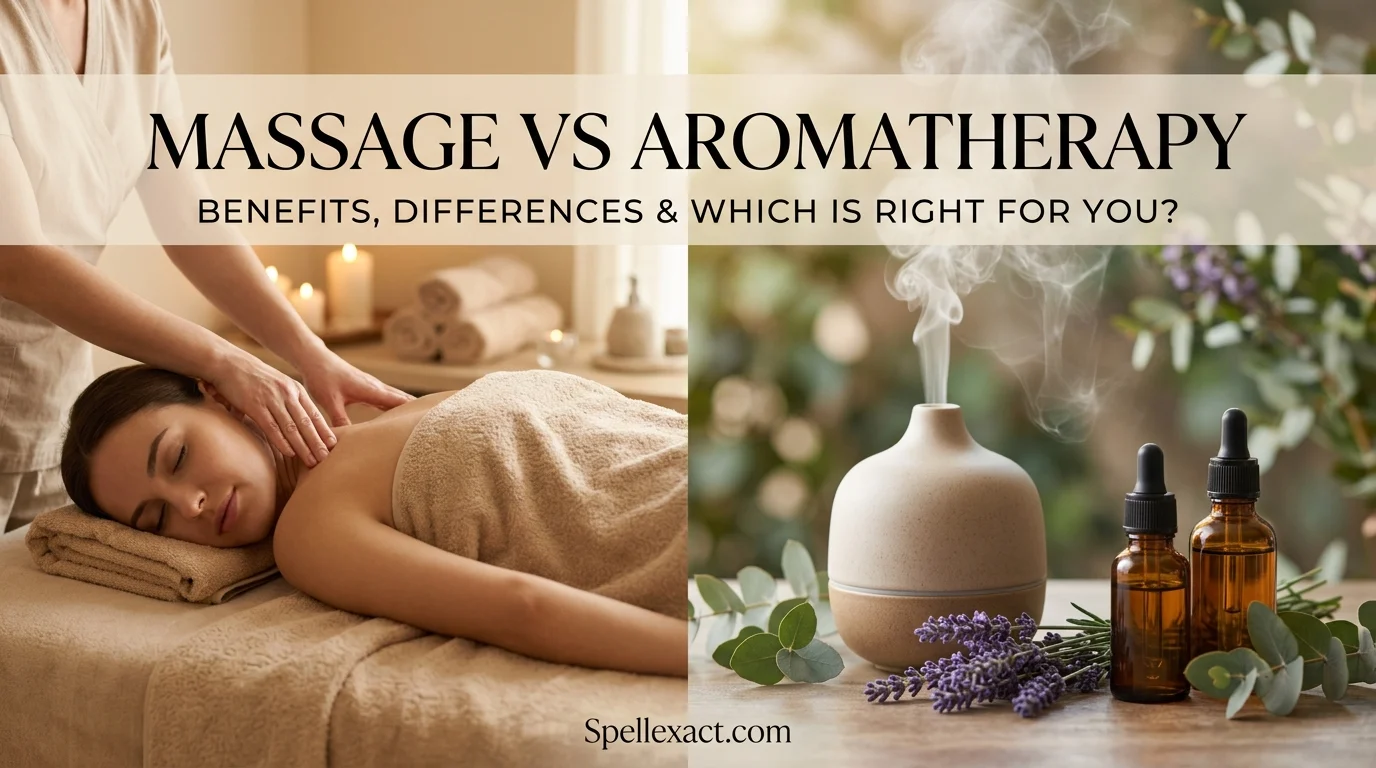
Massage and aromatherapy often appear together on spa menus, so many people think they are the same thing. They are not. Massage is a hands-on treatment where a trained person presses, rubs, and stretches your muscles and soft tissues. Aromatherapy is the use of natural plant oils, called essential oils, for their scent and possible calming effects.
The confusion is understandable. A therapist may add lavender oil to a massage, and the result is called an aromatherapy massage. But you can have a massage with no oils at all, and you can enjoy aromatherapy without anyone touching you. This guide explains what each one is, how they differ, when to choose each, and how to use them safely. Simple examples are included along the way.
Quick Answer:
Massage is a physical therapy that uses touch and pressure to relax muscles and ease tension. Aromatherapy uses scented essential oils, usually inhaled or diluted on the skin, to support relaxation and mood. Choose massage for muscle tightness and aromatherapy for scent-based relaxation. Combine them in an aromatherapy massage for both benefits.
Why Do People Confuse Massage and Aromatherapy?
There are three main reasons.
- They share the same setting. Both are common in spas, wellness centers, and hotels.
- They are often combined. An “aromatherapy massage” uses scented oils during a massage, so the two words appear together.
- They share a goal. Both are mostly used for relaxation and stress relief.
The key difference is the method. Massage works through touch. Aromatherapy works mainly through smell (and sometimes through the skin).
What Is Massage?
Massage is the manual manipulation of the body’s soft tissues, such as muscles, tendons, and connective tissue. A therapist uses hands, fingers, forearms, or sometimes tools to apply pressure and movement.
Common types include:
- Swedish massage: gentle to medium pressure, long strokes, very relaxing
- Deep tissue massage: slower, firmer pressure aimed at tight muscle layers
- Sports massage: focused on muscles used in training and recovery
- Thai massage: stretching and pressing, usually done fully clothed on a mat
People use massage for muscle tension, stiffness, stress, and general relaxation. Research suggests it can offer short-term relief for some types of back pain and stress, though results vary from person to person.
What Is Aromatherapy?
Aromatherapy is the practice of using essential oils, which are concentrated liquids taken from plants such as lavender, peppermint, eucalyptus, and orange. The oils are usually used in one of these ways:
- Inhaled from a diffuser, a tissue, or a steam bowl
- Applied to the skin after being mixed with a carrier oil such as sweet almond or jojoba oil
- Added to a bath after being mixed with a carrier
Aromatherapy is mainly used to support relaxation, mood, and sleep routines. Some small studies show short-term benefits for anxiety and sleep with scents like lavender, but the evidence is mixed. The U.S. National Institutes of Health explains how aromatherapy is used and what research says. Aromatherapy should not replace medical treatment.
Massage vs Aromatherapy: Comparison Table
| Feature | Massage | Aromatherapy |
| Main method | Touch, pressure, and movement | Scent from essential oils |
| Needs another person? | Usually yes (a therapist) | No, you can do it yourself |
| Main focus | Muscles and soft tissue | Mood, relaxation, and atmosphere |
| Main tools | Hands, massage table, oils or lotions | Essential oils, diffuser, carrier oil |
| Typical session | 30 to 90 minutes | A few minutes to hours (for example, a diffuser running in a room) |
| Common uses | Tight muscles, stiffness, stress | Calm, sleep routine, a pleasant environment |
| Main safety concern | Certain medical conditions | Skin irritation, allergies, undiluted oils |
| Can they be combined? | Yes, as aromatherapy massage | Yes, as aromatherapy massage |
When Should You Use Each One?
Choose massage when:
- Your neck, shoulders, or back feel tight
- You sit at a desk for long hours
- You want recovery after exercise
- You want a professional, hands-on session
Choose aromatherapy when:
- You want a calming scent at home
- You want to build a relaxing bedtime routine
- You cannot visit a therapist
- You want something low-cost and easy to do yourself
Choose both (aromatherapy massage) when:
- You want a deeply relaxing spa experience
- You enjoy scent and touch together
Examples of Massage and Aromatherapy in Sentences
- After a long flight, she booked a deep tissue massage for her sore shoulders.
- He puts a few drops of lavender oil in his diffuser every night.
- The spa offers a 60-minute aromatherapy massage with orange and ginger oil.
- A massage therapist can ease muscle tension, but she cannot cure a medical illness.
- Aromatherapy is not a medicine, so I still follow my doctor’s advice.
- My brother had a sports massage before the race.
- Peppermint aromatherapy can feel fresh and energizing when you study.
- Please tell your massage therapist about any injuries before the session.
- She mixed two drops of essential oil into a spoonful of carrier oil.
- Aromatherapy candles smell nice, but real essential oils work differently from synthetic fragrance.
- I enjoy a foot massage after a day of walking.
- The hotel room had an aromatherapy diffuser by the bed.
Common Mistakes to Avoid
- Thinking they are the same thing. Massage is touch. Aromatherapy is scent.
- Using undiluted essential oils on the skin. This can cause irritation or burns. Always mix with a carrier oil.
- Swallowing essential oils. Many are toxic if swallowed.
- Believing aromatherapy cures diseases. It may support relaxation, but it is not a cure.
- Mixing up fragrance oils and essential oils. Fragrance oils are often synthetic and are not true aromatherapy products.
- Skipping a patch test. Test a small amount on your inner arm first.
- Expecting deep tissue massage to be gentle. It can feel intense, so speak up about pressure.
- Not sharing your health history. Tell your therapist if you are pregnant, have a blood clot, skin problem, or recent injury.
Easy Memory Trick
Think “M for Muscles, A for Aroma.”
- Massage = Muscles and touch
- Aromatherapy = Aroma and smell
If someone is pressing on your back, it is massage. If you are smelling lavender from a diffuser, it is aromatherapy.
American vs British English
The spelling of both words is the same in American and British English: massage and aromatherapy. A few small differences are still useful to know:
- Pronunciation of “massage”: Americans usually say muh-SAHZH, with stress on the second part. Many British speakers say MAS-ahzh, with stress on the first part.
- Job titles: “Massage therapist” is the common professional term in both countries. “Masseur” (male) and “masseuse” (female) come from French and are heard in both, though they are less common in professional settings today.
- Related terms: Americans say “physical therapy” and Britons say “physiotherapy.” Americans say “esthetician” and Britons often say “beauty therapist.”
- Other spelling pairs: “flavor” (US) and “flavour” (UK) follow a different pattern, but “aroma” is the same in both.
Similar Words and Related Terms
- Aromatherapy massage: a massage that uses diluted essential oils
- Essential oil: a concentrated plant extract with a strong scent
- Carrier oil: a gentle oil, such as jojoba, used to dilute essential oils
- Reflexology: pressure applied to points on the feet or hands
- Acupressure: pressure on specific body points, based on traditional Chinese medicine
- Shiatsu: a Japanese finger-pressure massage style
- Bodywork: a general term for hands-on therapies
- Diffuser: a device that spreads essential oil scent into the air
- Physiotherapy (UK) / physical therapy (US): medical treatment for injury and movement problems, which is different from relaxation massage
Final Verdict
Massage and aromatherapy are different practices that work well together.If your main concern is tight, sore muscles, massage may be the better choice. For a calming scent and a simple at-home wellness routine, aromatherapy is worth trying. Want the best of both worlds? An aromatherapy massage combines soothing scents with the relaxing benefits of massage.Neither one replaces medical care when you have a health condition.
FAQs:
Is aromatherapy the same as massage?
No. Aromatherapy uses scented essential oils, mainly through smell. Massage uses touch and pressure on the body. They can be combined in an aromatherapy massage, but they are separate practices.
What is an aromatherapy massage?
It is a massage in which the therapist uses essential oils diluted in a carrier oil. You get the physical benefits of massage and the pleasant scent of the oils at the same time.
Which is better for stress: massage or aromatherapy?
Both may help you relax. Massage can ease physical tension, while aromatherapy can create a calm mood through scent. Many people find the combination most relaxing. Personal preference matters most.
Can I do aromatherapy without a massage?
Yes. You can use a diffuser, add a few drops of oil to a tissue, or use a diluted oil in a bath. No therapist is needed.
Are essential oils safe to put on your skin?
They are generally safe when properly diluted, but they can cause irritation or allergic reactions in some people. Do a patch test first, and avoid use near the eyes. Ask a doctor first if you are pregnant, have asthma, or have sensitive skin.
Is aromatherapy scientifically proven?
Evidence is limited and mixed. Some small studies suggest short-term benefits for anxiety and sleep, but it is not proven to treat or cure diseases. Treat it as a comfort practice, not as medicine.
How often should I get a massage?
There is no single rule. Some people go weekly during stressful periods, while others go monthly. Choose a schedule based on your needs, comfort, and budget.
Can aromatherapy help me sleep?
Some people find that scents like lavender help them wind down at bedtime. It may support a sleep routine, but it will not fix serious sleep problems. See a doctor if you struggle with sleep regularly.
Remember This
- Massage is touch. Aromatherapy is scent.
- You can have one without the other, or enjoy both together.
- Always dilute essential oils and do a patch test.
- Tell your therapist about your health conditions before a massage.
- Neither practice is a cure for medical problems.
Conclusion:
Massage and aromatherapy may share a spa menu, but they work in different ways. Massage relaxes the body through touch and pressure, and aromatherapy supports calm through scent. Knowing the difference helps you choose the right option for your needs, your budget, and your comfort.
Start with what you need most. If your muscles are tight, book a massage. If you want an easy relaxing habit at home, try a diffuser. Whichever you choose, stay safe, ask questions, and speak with a health professional when you have any medical concerns.
Aaron Adam is the Administrator of SpellExact, dedicated to helping readers improve their spelling and writing accuracy. He oversees content quality, ensures reliable language resources, and works to make spelling guidance simple, practical, and accessible for everyone.