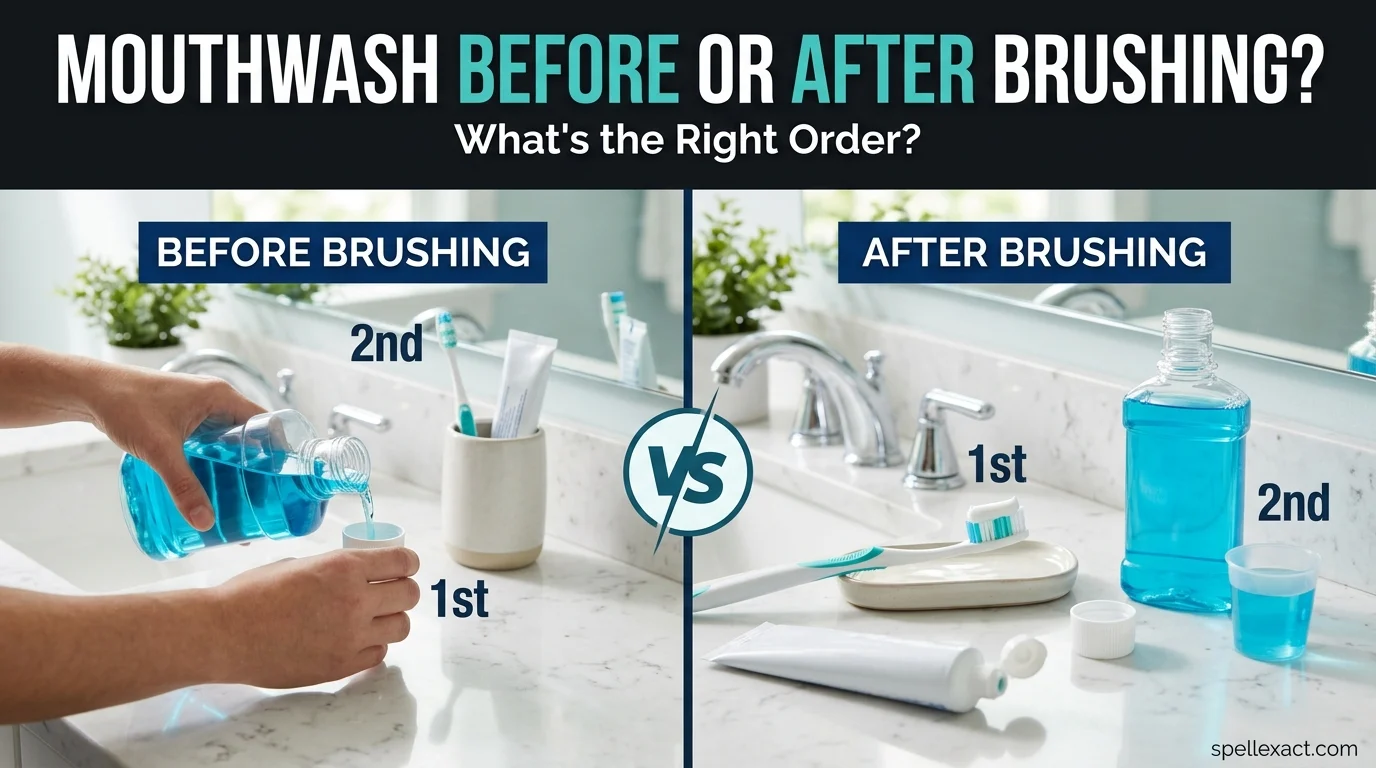
Should you use mouthwash before or after brushing? For most people, the best time is after brushing, but not right away. Brushing with fluoride toothpaste leaves a thin protective layer on your teeth, and rinsing immediately can wash it away. A better plan is to use mouthwash at a different time, such as after lunch, or to wait about 30 minutes after brushing.
Still, the answer depends on the type of mouthwash you use and on what your dentist advises. Some people rinse first to loosen food and plaque, while others rinse last for fresh breath. This guide explains both methods in simple English, shows when each one makes sense, and helps you build a routine that protects your teeth, gums, and breath.
Quick Answer
Mouthwash works best after brushing and flossing, but not immediately. Wait about 30 minutes so the fluoride from your toothpaste can keep protecting your teeth, or use a fluoride mouthwash at a different time of day, such as after lunch. Mouthwash is an extra step. It never replaces brushing and flossing.
Why Do People Confuse the Order?
Many people feel unsure because the advice they hear seems to conflict. Here is why:
- Product labels differ. Some brands suggest rinsing before brushing, while others say to rinse after.
- Mouthwashes are not all the same. Some only freshen breath, while others fight plaque, gum problems, or tooth decay.
- Habits vary. Many people grew up rinsing straight after brushing, so it feels natural.
- Advice has changed over time. Dentists now talk more about keeping fluoride on the teeth after brushing.
The confusion gets easier to solve when you know what each mouthwash is designed to do.
Mouthwash Before Brushing
Using mouthwash before brushing is sometimes called a pre-brush rinse. You swish the liquid around your mouth, spit it out, and then brush your teeth.
Possible benefits:
- It may loosen food bits and plaque so brushing removes them more easily.
- It freshens your mouth before you start.
- Your toothpaste stays on your teeth afterward, so the fluoride is not rinsed away.
Possible downsides:
- A mouthwash that is only for fresh breath does little to protect teeth before you brush.
- Some mouthwash flavors can clash with the taste of toothpaste.
- Some therapeutic rinses are designed to be used after brushing, so check the label.
Mouthwash After Brushing
Using mouthwash after brushing is the most common habit. You brush and floss first, then rinse.
Possible benefits:
- It reaches areas the brush and floss may have missed.
- It leaves your mouth tasting fresh.
- A fluoride or antibacterial rinse can add extra protection when used correctly.
Possible downsides:
- Rinsing right after brushing can wash away the fluoride from your toothpaste.
- Strong mouthwash can mix with leftover toothpaste and change how well each product works.
- Some alcohol-based rinses can cause dryness or a burning feeling.
Comparison Table: Before vs After Brushing
| Feature | Mouthwash Before Brushing | Mouthwash After Brushing |
| Main purpose | Loosen food and plaque, refresh the mouth | Reach missed spots, freshen breath, add protection |
| Effect on toothpaste fluoride | Fluoride stays on your teeth | Can wash fluoride away if done right after brushing |
| Best for | People who want brushing to be more effective | People who want fresh breath at the end of the routine |
| Wait time needed | None | About 30 minutes, or use at a different time of day |
| Common concern | May not protect teeth much if cosmetic only | Rinsing too soon reduces fluoride benefit |
| Good habit tip | Rinse, spit, then brush well | Brush, floss, wait, then rinse |
When to Use Each
Use mouthwash before brushing when:
- Your mouthwash label says it is a pre-brush rinse.
- You want to loosen food and plaque before brushing.
- You want to keep the toothpaste fluoride on your teeth.
Use mouthwash after brushing (with a wait) when:
- You use a fluoride or antibacterial rinse and want to avoid washing away toothpaste.
- You want fresh breath later in the day.
- Your dentist told you to use a special rinse after your normal routine.
Use mouthwash at a separate time when:
- You use a fluoride rinse and want it to work fully, such as after lunch.
- You use a prescription rinse, because some of these should be used well apart from toothpaste. Follow the exact instructions from your dentist or pharmacist.
Examples of Daily Routines
- Morning routine: Brush, floss, and wait 30 minutes before rinsing with mouthwash.
- After lunch: Rinse with fluoride mouthwash instead of brushing at work.
- Pre-brush rinse: Swish a pre-brush rinse for 30 seconds, spit, then brush.
- Evening routine: Brush and floss, then skip mouthwash so the fluoride stays on your teeth overnight.
- After a garlic meal: Rinse with mouthwash a short time later for a quick breath refresh.
- Before a meeting: Use a cosmetic mouthwash for fresh breath, with no brushing needed.
- After dental work: Follow your dentist’s exact advice and use only the rinse they recommend.
- For sensitive gums: Choose an alcohol-free mouthwash and use it away from brushing time.
- For dry mouth: Pick a gentle, alcohol-free rinse and use it between meals.
- For braces wearers: Brush and floss carefully, then use a fluoride rinse at a separate time.
- After a sugary snack: Rinse with water first, then brush or use fluoride mouthwash later.
- Travel day: Use a small bottle of mouthwash when you cannot brush, and brush as soon as you can.
Common Mistakes
- Rinsing with water right after brushing. This removes toothpaste fluoride just like mouthwash does. Spit out the extra toothpaste, but do not rinse heavily.
- Using mouthwash instead of brushing. Mouthwash cannot remove plaque the way a toothbrush and floss can.
- Swallowing it. Mouthwash is for rinsing and spitting. It is not safe to swallow.
- Giving it to young children. Children under 6 should not use mouthwash, since they may swallow it.
- Ignoring the label. Time, amount, and instructions differ from product to product.
- Using strong rinses every day without advice. Some medicated rinses, such as chlorhexidine, are meant for short-term use and can stain teeth.
- Expecting mouthwash to fix constant bad breath. If bad breath keeps coming back, see a dentist to find the cause.
Memory Trick
Remember Brush, Wait, Rinse.
Brush and floss first. Wait about 30 minutes. Then rinse if you want to. Think of fluoride as a coat of paint on your teeth. You would not wipe wet paint off right away.
American vs British English
The advice is the same in both countries, and the words are very similar. The differences are small:
- Mouthwash vs mouth rinse: Both are common in the US and UK. “Mouth rinse” appears often on American dental labels, while “mouthwash” is the usual everyday word in both.
- Spelling: Flavor and color are American spellings. Flavour and colour are British.
- Where to buy: Americans say drugstore or pharmacy, while the British often say chemist or pharmacy.
- Dental advice: The UK’s NHS suggests using fluoride mouthwash at a different time from brushing, such as after lunch. American dental groups also say mouthwash is optional and should not replace brushing and flossing.
Similar Words and Related Terms
- Mouth rinse: Another name for mouthwash.
- Oral rinse: A more formal name, often used by dentists.
- Gargle: To move liquid at the back of the throat. Mouthwash is often used this way, but its main job is cleaning the mouth.
- Fluoride rinse: A mouthwash with fluoride to help strengthen enamel and prevent cavities.
- Antiseptic rinse: A mouthwash that helps reduce germs in the mouth.
- Cosmetic mouthwash: A rinse that mainly freshens breath and does not treat disease.
- Therapeutic mouthwash: A rinse with active ingredients that help with plaque, gum problems, or cavities.
- Plaque: A sticky film of bacteria that forms on your teeth.
- Gingivitis: Early gum disease, often shown by red or bleeding gums.
Final Verdict
For most people, the best answer is simple: brush and floss first, then use mouthwash later, either after about 30 minutes or at another time of day. This protects the fluoride from your toothpaste and still gives you the benefit of the rinse.
Rinsing before brushing is also fine if that is what your product label or dentist recommends. The most important thing is to brush twice a day with fluoride toothpaste, clean between your teeth daily, and treat mouthwash as a helpful extra.
Frequently Asked Questions
Is it better to use mouthwash before or after brushing?
Most dentists prefer mouthwash after brushing, but with a delay. Waiting about 30 minutes, or using it at a different time of day, helps keep toothpaste fluoride on your teeth. Some products are made for use before brushing, so always read the label.
Can I use mouthwash right after brushing my teeth?
You can, but it may wash away the fluoride left by your toothpaste. If you want the full benefit of both products, wait about 30 minutes or use mouthwash at another time, such as after lunch.
How long should I wait to use mouthwash after brushing?
About 30 minutes is a common and practical guideline. If you use a prescription rinse, follow the timing your dentist or pharmacist gives you, since it may be different.
Should I rinse my mouth with water after brushing?
It is better not to rinse heavily. Spit out the extra toothpaste and leave a thin layer on your teeth so the fluoride keeps working.
Is mouthwash necessary?
No. Brushing twice a day with fluoride toothpaste and cleaning between your teeth daily are the main steps. Mouthwash is optional, though it can help some people, such as those with a higher risk of cavities or gum problems.
What is the best time of day to use mouthwash?
After lunch or between meals works well for many people. Using it at night right after brushing is less ideal, because you want the fluoride to stay on your teeth while you sleep.
Can mouthwash replace brushing or flossing?
No. Mouthwash cannot remove plaque the way a brush and floss can. It only adds extra freshness or protection.
Is alcohol-free mouthwash better?
It can be a good choice if alcohol-based rinses make your mouth feel dry or sting. Both types can work, so choose one that suits you and ask your dentist if you are unsure.
Remember This
- Brush and floss first.
- Wait about 30 minutes before using mouthwash, or use it at another time of day.
- Do not rinse heavily with water after brushing.
- Mouthwash is an extra step, not a replacement for brushing or flossing.
- Choose a mouthwash for your needs: fresh breath, cavity protection, or gum care.
- Children under 6 should not use mouthwash.
- Ask a dentist if you have gum problems, dry mouth, or constant bad breath.
Conclusion
The order of your mouthwash matters less than the habits around it, but a small change can make your routine work better. Brush and floss, then give your toothpaste time to do its job before you rinse. If you prefer a pre-brush rinse, that is a valid choice too, as long as you follow the label.
A healthy mouth comes from simple, steady care: fluoride toothpaste, daily flossing, regular dental visits, and a mouthwash that fits your needs. If you are not sure which rinse or routine is right for you, a dentist can give advice based on your teeth and gums.

Aaron Adam is the Administrator of SpellExact, dedicated to helping readers improve their spelling and writing accuracy. He oversees content quality, ensures reliable language resources, and works to make spelling guidance simple, practical, and accessible for everyone.