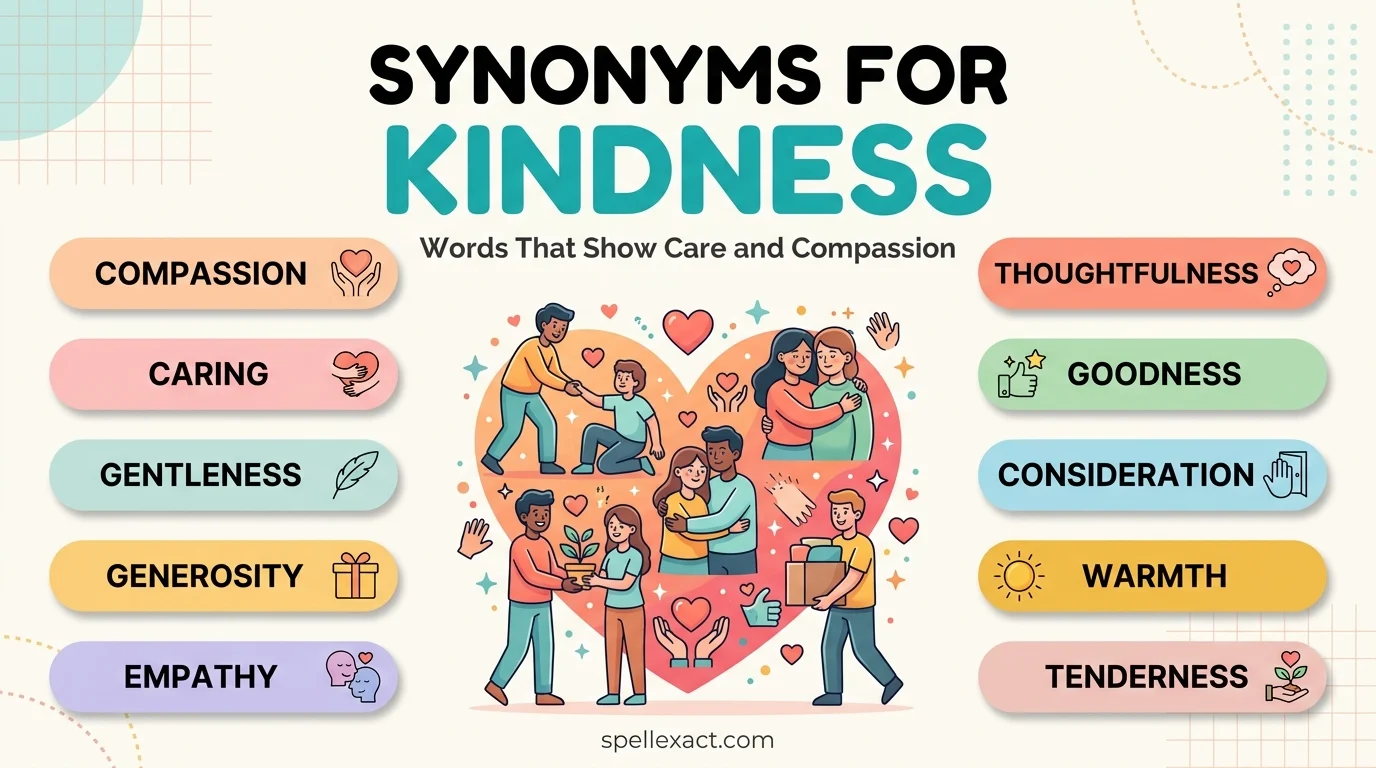
Synonyms for kindness help describe care, respect, and warmth in simple, natural ways while making writing clearer and more meaningful for readers. Affection, gentleness, tenderness, and sweetness express warmth, while cordiality, amiability, courtesy, and graciousness describe friendly relationships. In everyday life, decency, goodness, grace, and kindliness appear through small actions, such as listening patiently, speaking politely, and offering help. Understanding these words helps writers communicate ideas clearly and choose language that reflects genuine kindness.
Many synonyms for kindness describe how people understand feelings and respond to the needs of others. Affection, sympathy, fellow feeling, understanding, consideration, and thoughtfulness show awareness of other people’s experiences. Patience, tolerance, forbearance, clemency, mildness, delicacy, and indulgence describe calm and considerate responses. Meanwhile, altruism, benevolence, beneficence, charity, philanthropy, and unselfishness emphasize helping others without expecting a personal reward. These qualities support compassion, emotional support, generous behavior, and a sincere desire to make life easier for others.
Kindness also appears through practical help and genuine concern for other people. Helpfulness, serviceability, solicitude, and solicitousness describe a willingness to assist others and pay attention to their needs. Hospitality means welcoming others, while humanity reflects compassion and respect. Heart suggests a caring nature, and good will and good intention express a positive attitude. Tact describes sensitivity during conversation, while affection conveys warmth and benevolence expresses a desire to do good. Choosing the right synonyms helps writers communicate the exact meaning, maintain natural language, and avoid unnecessary repetition.
Quick Answer: What Are the Best Synonyms for Kindness?
The best synonyms for kindness depend on what you want to express.
- Compassion: Concern for someone who is suffering.
- Generosity: A willingness to give or share.
- Thoughtfulness: Careful attention to another person’s needs.
- Kindliness: A friendly and caring nature.
- Benevolence: A desire to do good for others.
- Consideration: Respect for other people’s feelings and needs.
- Goodwill: Friendly and positive intentions.
- Gentleness: A soft, calm, and careful manner.
- Graciousness: Polite and generous behavior.
- Goodness: The quality of being morally good and considerate.
If you need another word for kindness in an everyday sentence, thoughtfulness, caring, or generosity may fit well. For formal writing, benevolence and beneficence are useful options.
What Does Kindness Mean?
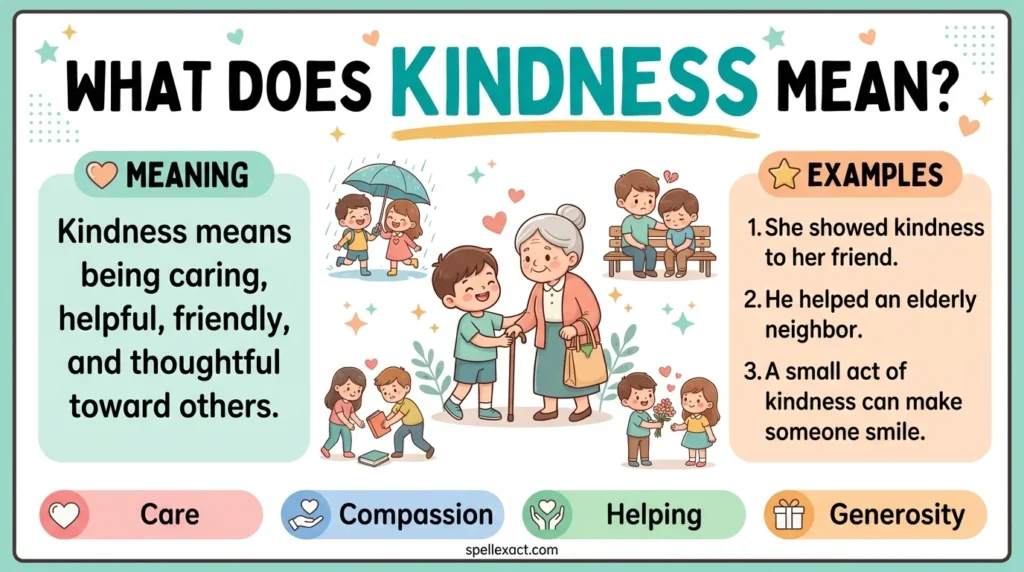
Kindness is the quality of treating people with care, consideration, and goodwill. It involves recognizing other people’s needs and responding in a helpful, respectful, or compassionate way.
Kindness can appear in small everyday actions, such as listening to a friend, helping a classmate, welcoming a new neighbor, or offering encouragement to someone who feels discouraged.
For example:
- Her kindness made the new student feel welcome.
- He showed kindness by helping his older neighbor.
- A simple act of kindness brightened her day.
The word kindness is a noun. The adjective kind describes a person or action, while kindness describes the quality itself.
Kindness can also refer to a specific helpful action. For example, in “Thank you for your kindness,” the speaker may be expressing gratitude for a particular favor or thoughtful gesture.
30 Synonyms for Kindness With Meanings and Examples
These 30 words include established synonyms and closely related alternatives. Some can replace kindness directly in certain sentences, while others describe a particular form of kind behavior.
1. Kindliness
Simple meaning: A friendly, caring, and gentle nature.
Example: Her kindliness made every visitor feel welcome.
Best usage: Use kindliness when describing someone’s consistently warm and caring character. It is less common in everyday conversation than kindness.
2. Compassion
Simple meaning: Concern for someone who is suffering, often accompanied by a desire to help.
Example: The nurse showed compassion toward patients who were frightened.
Best usage: Use compassion when discussing hardship, emotional support, or concern for people in difficult situations.
3. Generosity
Simple meaning: A willingness to give time, money, help, or resources freely.
Example: His generosity helped several families during the winter.
Best usage: Use generosity when kindness involves sharing, giving, or offering assistance without focusing on personal gain.
4. Benevolence
Simple meaning: A desire or intention to do good for others.
Example: The organization demonstrated benevolence by supporting families in need.
Best usage: Use benevolence in formal writing, discussions of moral character, or descriptions of charitable intentions.
5. Beneficence
Simple meaning: The act or practice of doing good and helping others.
Example: The community program demonstrated beneficence by providing free meals.
Best usage: Use beneficence in formal, ethical, or academic discussions about actions that benefit other people.
6. Goodness
Simple meaning: The quality of being morally good, caring, and considerate.
Example: Her goodness was evident in the way she treated people who needed help.
Best usage: Use goodness when describing someone’s moral character or general willingness to do what is right.
7. Goodness of Heart
Simple meaning: A naturally caring and generous character.
Example: His goodness of heart showed when he helped a stranger without being asked.
Best usage: Use this expression in personal writing, character descriptions, and heartfelt messages.
8. Humanity
Simple meaning: Compassion, understanding, and concern for other people.
Example: The volunteers treated everyone with humanity and respect.
Best usage: Use humanity when emphasizing compassion, dignity, and humane treatment, especially during difficult circumstances.
9. Humaneness
Simple meaning: The quality of treating people with compassion and avoiding unnecessary suffering.
Example: The shelter was praised for its humaneness toward vulnerable families.
Best usage: Use humaneness in formal writing about ethical decisions, public services, social care, and humane treatment.
10. Charity
Simple meaning: Generous concern for people in need, often expressed through giving or assistance.
Example: The community showed charity by donating food to struggling families.
Best usage: Use charity when kindness involves helping people who need resources or support. It can also refer to an organization established for that purpose.
11. Philanthropy
Simple meaning: Giving money, resources, or organized support to improve people’s lives and benefit society.
Example: Her philanthropy helped fund a new public library.
Best usage: Use philanthropy when discussing charitable donations, foundations, community projects, and large-scale efforts to improve society.
12. Mercy
Simple meaning: Choosing to be forgiving or less severe toward someone who could be punished or treated harshly.
Example: The judge showed mercy after considering the circumstances of the case.
Best usage: Use mercy when kindness involves leniency, forgiveness, or reducing punishment or suffering.
13. Sympathy
Simple meaning: Concern or sorrow for someone experiencing difficulty.
Example: We expressed our sympathy after her family suffered a loss.
Best usage: Use sympathy when responding to grief, hardship, disappointment, or another person’s distress.
14. Consideration
Simple meaning: Careful attention to other people’s feelings, needs, and circumstances.
Example: She showed consideration by keeping the noise down while her neighbor rested.
Best usage: Use consideration in everyday situations, professional communication, and discussions about respect for others.
15. Graciousness
Simple meaning: Polite, warm, and generous behavior.
Example: She accepted the feedback with graciousness.
Best usage: Use graciousness when kindness appears through good manners, generosity of spirit, or dignified behavior.
16. Goodwill
Simple meaning: A friendly, positive, and well-meaning attitude toward others.
Example: The neighbors worked together in a spirit of goodwill.
Best usage: Use goodwill when describing cooperation, friendly relationships, community spirit, or positive intentions.
17. Tenderness
Simple meaning: A gentle and affectionate way of showing care.
Example: The father held his newborn baby with tenderness.
Best usage: Use tenderness when kindness involves affection, emotional closeness, or gentle treatment.
18. Gentleness
Simple meaning: A calm, soft, and careful way of treating people.
Example: She spoke with gentleness to the frightened child.
Best usage: Use gentleness when describing a soft voice, patient behavior, or a reassuring approach.
19. Courtesy
Simple meaning: Polite behavior that shows respect and consideration.
Example: The receptionist treated every visitor with courtesy.
Best usage: Use courtesy in workplaces, customer service, formal communication, and situations involving good manners.
20. Thoughtfulness
Simple meaning: Taking time to consider another person’s needs, feelings, or comfort.
Example: Her thoughtfulness showed when she prepared a meal for her sick neighbor.
Best usage: Use thoughtfulness when describing small but meaningful actions that show someone cares.
21. Unselfishness
Simple meaning: Willingness to consider other people’s needs instead of focusing only on personal interests.
Example: Her unselfishness was clear when she shared her supplies with the other students.
Best usage: Use unselfishness when describing actions motivated by concern for others rather than personal advantage.
22. Altruism
Simple meaning: Concern for other people’s well-being without making personal gain the main goal.
Example: His altruism inspired him to volunteer at a community shelter.
Best usage: Use altruism in formal writing about selfless behavior, volunteering, and moral values.
23. Magnanimity
Simple meaning: Generous and forgiving behavior, especially toward a rival or someone who has wronged you.
Example: She showed magnanimity by congratulating the person who defeated her.
Best usage: Use magnanimity when describing noble generosity, forgiveness, or gracious behavior after a disagreement or competition.
24. Patience
Simple meaning: The ability to remain calm when something takes time or becomes difficult.
Example: The tutor showed patience while explaining the lesson again.
Best usage: Use patience when kindness involves allowing someone time to learn, improve, or explain themselves. Patience is related to kindness, but it is not always a direct synonym.
25. Understanding
Simple meaning: Recognizing another person’s feelings, difficulties, or point of view.
Example: Her understanding helped her support her friend during a stressful time.
Best usage: Use understanding when describing empathy, acceptance, or a willingness to consider another person’s circumstances.
26. Tolerance
Simple meaning: Willingness to accept differences in opinions, beliefs, or behavior.
Example: The teacher encouraged tolerance and respect among students with different viewpoints.
Best usage: Use tolerance when kindness involves accepting differences and treating people fairly. It does not necessarily mean agreeing with someone.
27. Affection
Simple meaning: A feeling of fondness, warmth, or attachment toward someone.
Example: She showed her affection by checking on her friend every day.
Best usage: Use affection when kindness involves love, fondness, or emotional closeness.
28. Cordiality
Simple meaning: A warm, polite, and friendly manner.
Example: The host greeted every guest with cordiality.
Best usage: Use cordiality in formal or professional settings where people behave in a friendly and respectful way.
29. Hospitality
Simple meaning: Friendly and generous treatment of guests or visitors.
Example: Their hospitality made us feel at home during our visit.
Best usage: Use hospitality when kindness involves welcoming people, offering refreshments, or making guests comfortable.
30. Decency
Simple meaning: Behavior that is fair, respectful, and morally acceptable.
Example: He showed basic decency by helping the injured stranger.
Best usage: Use decency when describing respectful treatment, fairness, and doing what is right. It can be less affectionate than kindness and may emphasize a basic standard of behavior.
Comparison Table: Which Synonym for Kindness Should You Choose?
Not every synonym works in every sentence. This table highlights the differences between some of the most useful alternatives.
| Word | Main emphasis | Best context |
| Kindliness | Caring character | Describing personality |
| Compassion | Concern for suffering | Emotional support |
| Generosity | Giving freely | Gifts, time, and resources |
| Benevolence | Desire to do good | Formal writing |
| Beneficence | Actions that benefit others | Ethical or academic writing |
| Goodness | Moral character | Personal descriptions |
| Humanity | Compassion and dignity | Social issues |
| Charity | Help for people in need | Donations and assistance |
| Mercy | Leniency | Forgiveness and punishment |
| Sympathy | Concern for hardship | Difficult times |
| Consideration | Respect for needs | Everyday relationships |
| Graciousness | Polite generosity | Formal interactions |
| Goodwill | Friendly intentions | Cooperation |
| Tenderness | Gentle affection | Close relationships |
| Courtesy | Good manners | Professional settings |
| Thoughtfulness | Considering others | Everyday gestures |
| Altruism | Helping without self-interest | Volunteering |
| Magnanimity | Generosity toward a rival | Disagreements and competition |
| Tolerance | Accepting differences | Diverse communities |
| Hospitality | Welcoming guests | Social visits |
What’s the Difference Between Kindness, Compassion, and Generosity?
These three words are often used together, but they emphasize different qualities.
- Kindness is the broadest term. It includes caring, respectful, and helpful behavior.
- Compassion focuses on concern for another person’s suffering and often involves a desire to help.
- Generosity focuses on giving, sharing, or offering resources, time, or assistance.
Consider these examples:
- “She showed kindness by checking on her neighbor.”
- “She showed compassion by comforting a neighbor who was grieving.”
- “She showed generosity by providing meals for the neighbor’s family.”
All three actions can be kind, but each word highlights a different part of the behavior.
How to Choose the Right Synonym for Kindness
The best word depends on the meaning you want to express, the tone of your writing, and the situation you are describing.
For Everyday Conversations
Choose simple, natural words that work well in messages, school assignments, and daily speech.
- Thoughtfulness: Thank you for your thoughtfulness.
- Generosity: I appreciate your generosity.
- Consideration: Thank you for your consideration.
- Goodwill: They treated each other with goodwill.
- Gentleness: She handled the situation with gentleness.
These alternatives are useful for English learners because they express specific kinds of kindness without requiring complicated language.
For Formal or Professional Writing
Choose words that communicate moral values, respectful behavior, or a desire to help.
- Benevolence: The organization demonstrated benevolence toward vulnerable families.
- Beneficence: The program was designed to promote beneficence.
- Humaneness: The policy should reflect humaneness and fairness.
- Graciousness: She responded to the criticism with graciousness.
- Courtesy: The staff handled the complaint with courtesy.
Formal words should fit the context. A simpler word is often more effective when the meaning is straightforward.
For Emotional Support
Choose words that express concern, affection, or an understanding of someone’s feelings.
- Compassion: He showed compassion for people facing hardship.
- Sympathy: We offered our sympathy after the loss.
- Tenderness: She treated the frightened child with tenderness.
- Affection: He showed affection through small acts of care.
- Understanding: Her understanding helped her friend feel heard.
Remember that sympathy and compassion are not identical. Sympathy emphasizes concern for someone else’s difficulty, while compassion often suggests a desire to relieve suffering.
For Generous or Selfless Actions
Choose words that reflect giving, sharing, or helping others.
- Generosity: She shared her resources with the community.
- Charity: The organization provided food to families in need.
- Philanthropy: The foundation funded a new community library.
- Altruism: He volunteered because he wanted to help others.
- Unselfishness: She put the team’s needs ahead of personal recognition.
Use generosity for everyday giving and philanthropy for organized charitable support. Altruism and unselfishness emphasize concern for others rather than personal benefit.
For Politeness and Respect
Some alternatives describe kindness through respectful behavior rather than emotional affection.
- Courtesy: The receptionist greeted every visitor politely.
- Graciousness: She accepted the decision with dignity.
- Consideration: He kept his music quiet so others could study.
- Cordiality: The meeting began with warm and friendly greetings.
- Decency: She treated everyone fairly, even when they disagreed.
These words are particularly useful in professional writing, essays about character, and descriptions of social behavior.
Common Mistakes When Using Synonyms for Kindness
Understanding related vocabulary helps you avoid sentences that sound unnatural or communicate the wrong meaning.
1. Confusing Empathy With Sympathy
Empathy means understanding or sharing another person’s feelings. Sympathy means feeling concern for someone experiencing difficulty.
For example:
- Sympathy: “I expressed my sympathy after her loss.”
- Empathy: “I understood why she felt overwhelmed.”
Both can be appropriate, but they emphasize different responses.
2. Using Generosity When You Mean Courtesy
Generosity involves giving or sharing. Courtesy involves polite and respectful behavior.
Less accurate: “The receptionist showed generosity by greeting me politely.”
Better: “The receptionist showed courtesy by greeting me politely.”
3. Treating Every Related Word as an Exact Synonym
Words such as patience, tolerance, affection, and hospitality can express forms of kindness, but they do not always replace kindness naturally.
For example, “Thank you for your hospitality” is appropriate when someone welcomes you into their home. “Thank you for your patience” is appropriate when someone waits calmly or gives you extra time.
Choose a word that matches the actual action.
4. Using Formal Vocabulary in Casual Situations
Words such as beneficence, benevolence, and magnanimity can sound overly formal in everyday conversation.
Instead of saying, “I appreciate your benevolence for helping me,” say, “I appreciate your kindness and help.”
5. Confusing Kindness With Weakness
Kindness does not mean agreeing with everyone or accepting unfair treatment. A person can be considerate and compassionate while setting clear boundaries.
For example: “She listened patiently but firmly explained that the behavior was unacceptable.”
Kindness can include honesty, fairness, and respectful disagreement.
Frequently Asked Questions
1. What is the closest synonym for kindness?
Compassion is a close alternative when kindness involves concern for someone who is suffering. Kindliness, goodness, and benevolence are also useful alternatives, depending on the sentence.
2. What are five common synonyms for kindness?
Five useful synonyms are compassion, generosity, thoughtfulness, consideration, and goodwill. Each emphasizes a different quality, from emotional concern to giving and respectful behavior.
3. What is a formal word for kindness?
Benevolence is a formal alternative that describes a desire to do good for others. Beneficence emphasizes beneficial actions, while humaneness emphasizes compassionate and humane treatment.
4. What is another word for kindness and generosity?
Benevolence can describe a general desire to help others. Charity often involves giving resources to people in need, while altruism emphasizes helping others without making personal gain the main goal.
5. What is the difference between kindness and compassion?
Kindness is a broad term for caring, considerate, and helpful behavior. Compassion specifically emphasizes concern for suffering and often includes a desire to reduce it.
6. What is the opposite of kindness?
Common opposites include unkindness, cruelty, harshness, malevolence, and hostility. Unkindness is the most direct general opposite, while cruelty suggests causing suffering and hostility describes an unfriendly or aggressive attitude.
7. How can I use synonyms for kindness in an essay?
Choose words that support your exact point. Use compassion when discussing suffering, generosity when describing giving, courtesy when discussing manners, and benevolence when writing about a desire to do good. Avoid replacing every occurrence of kindness simply to make the vocabulary look more varied.
8. Can kindness be shown without giving money?
Yes. Listening carefully, offering encouragement, helping with a task, respecting someone’s feelings, and welcoming a new student are all examples of kindness. Generosity can also involve sharing time and effort instead of money.
Conclusion
The best synonyms for kindness depend on the action, feeling, or quality you want to describe. Compassion emphasizes concern for suffering, generosity focuses on giving, thoughtfulness involves considering others’ needs, and courtesy highlights polite behavior. More formal alternatives, such as benevolence and beneficence, can be useful when discussing moral values or actions that benefit others.
For everyday English, start with words such as compassion, generosity, thoughtfulness, and consideration. As your vocabulary grows, learn the differences between related words and use them in the right contexts. The result will be clearer writing, more natural sentences, and a stronger understanding of how English expresses kindness.

Caleb Carter is a passionate language enthusiast and content writer specializing in spelling mistakes, grammar, and vocabulary. He creates clear, practical guides that help readers improve their writing skills and communicate confidently every day.