When writing a list of rules, advice, or things people should avoid, you may wonder: donts or don’ts which one is correct? This small punctuation question causes a surprising amount of confusion because both forms may look familiar, especially in informal writing.
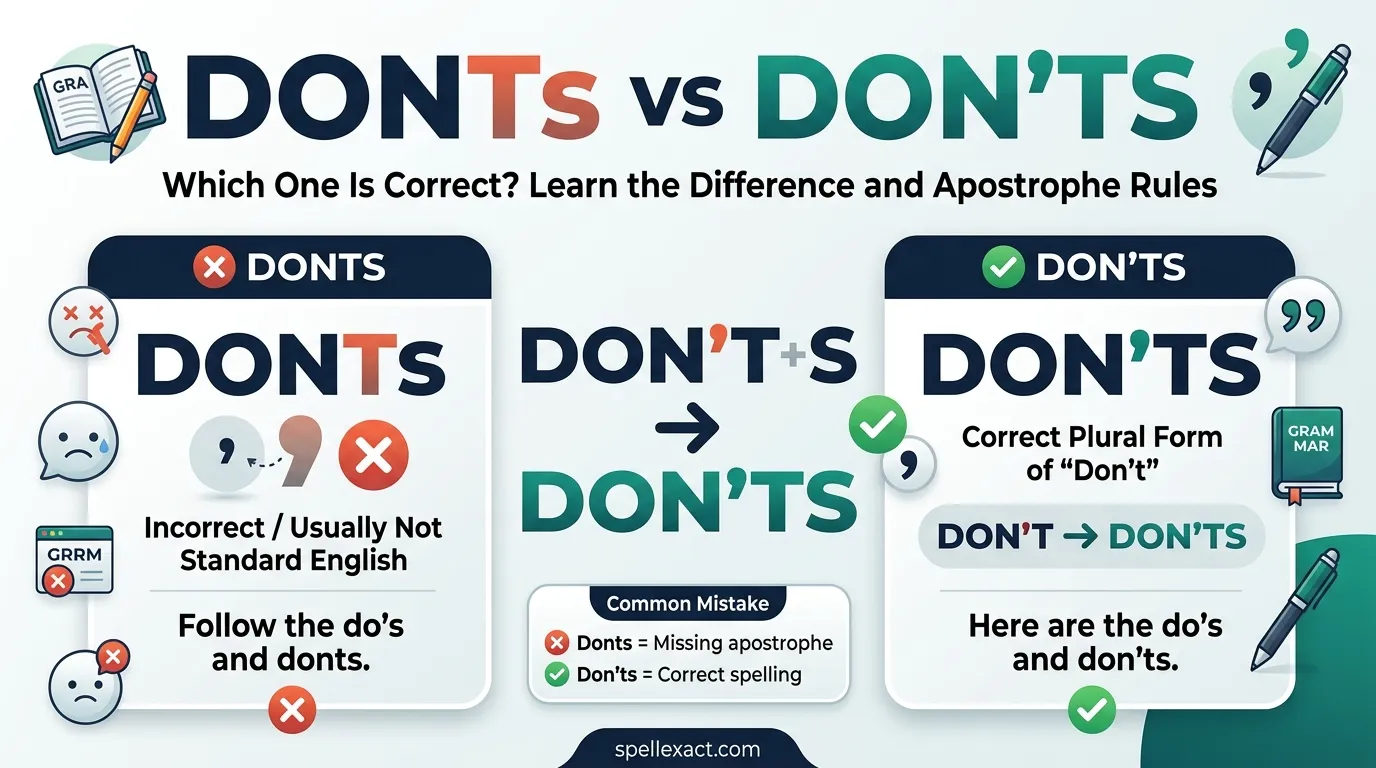
The correct standard spelling is don’ts, with an apostrophe. The form donts is generally considered incorrect in standard English because don’t is a contraction of do not, and the apostrophe must remain when creating its plural form. Let’s explore the rule, meaning, examples, common mistakes, and everything else you need to use this word confidently.
Quick Answer:
Don’ts is the correct spelling.
- Correct: Don’ts
- Incorrect in standard English: Donts
The apostrophe appears before the s because don’ts is the plural form of don’t, meaning multiple things that someone should not do.
Example: Here are the do’s and don’ts of professional email writing.
What Does “Don’ts” Mean?
The word don’ts refers to things that people are advised, instructed, or expected not to do. It is commonly used alongside do’s, creating the familiar expression:
Do’s and don’ts
For example:
- The article explains the do’s and don’ts of job interviews.
- Learn the social media do’s and don’ts before posting.
- These are the most important travel don’ts.
- The guide lists several don’ts for first-time drivers.
In simple terms, a do is something you should do, while a don’t is something you should avoid.
When discussing more than one prohibited action or piece of advice, we use the plural don’ts.
Why Is “Don’ts” Spelled With an Apostrophe?
The apostrophe is important because the singular word is don’t, a contraction of do not.
The word is formed like this:
Do not → don’t
The apostrophe replaces the missing letter o from not. When the plural s is added, the apostrophe remains part of the original word:
Don’t → don’ts
Therefore:
- One don’t → don’t
- More than one don’t → don’ts
However, when discussing punctuation in published writing, many style guides and dictionaries present the plural as don’ts, particularly in the expression do’s and don’ts.
The key point is simple: removing the apostrophe entirely and writing “donts” changes the standard spelling of the contraction.
Donts or Don’ts: Side-by-Side Comparison
| Form | Correct? | Meaning | Example |
| Don’ts | Yes | Things that should not be done | Learn the don’ts of public speaking. |
| Donts | No in standard English | Misspelling of don’ts | Incorrect: Follow these donts. |
| Don’t | Yes | A contraction of “do not” | Don’t forget your keys. |
| Do’s and don’ts | Yes | Recommended actions and actions to avoid | Read the do’s and don’ts before you begin. |
This comparison makes the distinction clear: if you mean several things that people should not do, don’ts is the standard form.
Examples of “Don’ts” in Sentences
Here are some practical examples showing how don’ts is used naturally:
- Every beginner should understand the basic do’s and don’ts of grammar.
- The teacher explained the don’ts of academic writing.
- Before traveling abroad, learn the cultural do’s and don’ts.
- The website provides helpful do’s and don’ts for online safety.
- One of the biggest don’ts during an interview is arriving late.
- The guide covers important don’ts for responsible social media use.
- Parents often teach children the basic do’s and don’ts of road safety.
- Understanding workplace don’ts can help you avoid common professional mistakes.
Notice that don’ts usually appears as a noun. It refers to actions, rules, behaviors, or practices that should be avoided.
Common Mistakes When Writing “Donts”
1. Writing “Donts” Without an Apostrophe
This is the most common mistake.
Incorrect: Here are the donts of blogging.
Correct: Here are the don’ts of blogging.
Because the word comes from the contraction don’t, the apostrophe should not disappear.
2. Confusing “Don’ts” With “Don’t”
Another mistake is using the singular contraction when a plural noun is needed.
Incorrect: Here are five important don’t.
Correct: Here are five important don’ts.
Use don’t when giving a direct instruction:
- Don’t touch that.
Use don’ts when referring to multiple prohibited actions:
- Learn the don’ts before starting.
3. Forgetting the Apostrophe in “Do’s and Don’ts”
The phrase do’s and don’ts is extremely common, so it is also frequently misspelled.
A safe standard form is:
Do’s and don’ts
Example: This article covers the do’s and don’ts of effective communication.
Some style preferences may differ regarding how plurals of short words are punctuated, particularly with do’s versus dos. However, don’ts retains the apostrophe because it is based on the contraction don’t.
4. Using “Dont’s” Incorrectly
Another common error is placing the apostrophe before the s:
Incorrect: Dont’s
This form is not the standard spelling for the plural of don’t.
The apostrophe belongs within the original contraction:
Correct: Don’ts
The correct order is:
d-o-n-apostrophe-t-s
Do’s and Don’ts: Why the Phrase Is So Popular
The expression do’s and don’ts is widely used because it provides a quick and memorable way to present advice.
You might see it in content about:
- Workplace etiquette
- Grammar and writing
- Social media
- Job interviews
- Travel
- Parenting
- Business communication
- Health and safety
- Relationships
- Education
For example:
The do’s and don’ts of a successful job interview
This structure immediately tells readers that they will learn both positive recommendations and mistakes to avoid.
From an SEO and content-writing perspective, phrases such as writing dos and don’ts, interview do’s and don’ts, grammar rules, common mistakes, and things to avoid are closely related concepts. Using these naturally can also help readers understand the topic more completely.
Is “Donts” Ever Acceptable?
In standard English, donts without an apostrophe is generally treated as a spelling or punctuation mistake.
You may occasionally see it online in:
- Social media posts
- Informal comments
- User-generated content
- Search queries
- URLs or file names where punctuation is unavailable
However, seeing a form used online does not necessarily make it grammatically correct.
For formal writing, academic work, professional communication, blog articles, and published content, it is best to write:
don’ts
If you are targeting the search query donts or don’ts, remember that people often search for the incorrect form because they are trying to determine the correct spelling. Your content can mention both spellings while clearly explaining that don’ts is the standard choice.
American English vs British English
There is no major difference between American and British English regarding the spelling of don’ts when referring to the plural form of don’t.
Both varieties of English use:
Don’t = do not
Don’ts = things that should not be done
For example:
American English: Learn the do’s and don’ts of writing a resume.
British English: Learn the do’s and don’ts of writing a CV.
The surrounding vocabulary may change such as resume in American English and CV in British English but the word don’ts follows the same basic spelling rule.
One area where editorial styles can vary is the plural spelling of do, with some publications preferring dos and others using do’s for clarity. But this stylistic variation should not be confused with donts, which removes the apostrophe from the contraction don’t.
How to Remember the Correct Spelling
An easy memory trick is to think about the singular word first.
Ask yourself:
What is the singular form?
The answer is don’t.
Then simply add s to make it plural:
don’t + s = don’ts
The apostrophe stays because it belongs to the contraction.
You can remember it with this simple rule:
If the word starts as don’t, its plural should not become donts.
Another helpful approach is to connect the word to its meaning:
Do not → don’t → don’ts
This sequence makes the spelling much easier to remember.
When Should You Use “Don’ts”?
Use don’ts when discussing multiple actions, behaviors, or practices that should be avoided.
Examples of appropriate situations:
Instructions:
Review the safety don’ts before using the equipment.
Advice articles:
Here are the biggest don’ts of starting a new business.
Educational content:
Students should understand the basic don’ts of academic writing.
Professional guidance:
The presentation covers workplace do’s and don’ts.
Travel guides:
Learn the local do’s and don’ts before visiting another country.
In each example, don’ts functions as a plural noun representing prohibited or discouraged actions.
Donts or Don’ts: The Correct Choice
If you are deciding between donts or don’ts, the answer is straightforward:
Use “don’ts” with an apostrophe.
The apostrophe is not decorative. It is part of the original contraction don’t, which comes from do not. When you make the word plural, add s after the existing contraction rather than removing the apostrophe.
So, whether you are writing a blog post, grammar guide, business article, school assignment, or professional document, the standard spelling is:
Don’ts
Frequently Asked Questions
Is it “donts” or “don’ts”?
Don’ts is the correct standard spelling. It is the plural form of don’t and refers to things that should not be done.
Why does “don’ts” have an apostrophe?
The apostrophe comes from don’t, which is a contraction of do not. The apostrophe remains when the plural s is added.
Is “Dont’s” correct?
No. Dont’s places the apostrophe incorrectly. The correct spelling is don’ts, with the apostrophe between n and t.
What is the singular form of “don’ts”?
The singular form is don’t. It can be used as a contraction in a sentence or as a noun referring to one thing that should not be done, depending on context.
Is “do’s and don’ts” grammatically correct?
Yes. Do’s and don’ts is a widely accepted expression referring to recommended actions and actions that should be avoided.
Can I write “dos and don’ts”?
Yes, depending on the style guide or editorial preference. Dos and don’ts is also commonly used, especially when treating dos as the plural of the noun do. The spelling don’ts still retains its apostrophe.
Is “donts” acceptable in informal writing?
It may appear in casual online writing or search terms, but it is generally not considered correct in standard English. Use don’ts when proper spelling and punctuation matter.
Is there a difference between American and British English?
No significant difference applies to don’ts. Both American and British English use the same basic spelling for the plural form of don’t.
Summary:
When comparing donts or don’ts, the correct standard form is don’ts. The word refers to actions or behaviors that should be avoided and is commonly used in the phrase do’s and don’ts. The apostrophe remains because don’t is a contraction of do not, and adding the plural s does not remove that punctuation.
The easiest rule to remember is to start with the singular form: don’t. If you need the plural, add s to create don’ts. Avoid donts in formal or standard writing, and also avoid dont’s, where the apostrophe is placed incorrectly.
Actionable Takeaway
Before publishing or submitting your writing, remember this quick check: if you mean multiple things people should not do, write don’ts. If you are giving a direct instruction, use don’t. This simple distinction will help you avoid a common spelling and punctuation mistake while making your writing clearer and more professional.

Andrew Anthony is a language enthusiast and content writer specializing in spelling mistakes, grammar, and English usage. He creates clear, practical, and well-researched guides that help readers improve their writing skills with confidence.