Have you ever written “hazzard” and wondered whether it looks right? You are not alone. Because English contains many words with doubled consonants, it can be easy to assume that hazzard is the correct spelling.
However, when you are writing an email, school assignment, report, safety notice, or professional document, using the correct form matters.
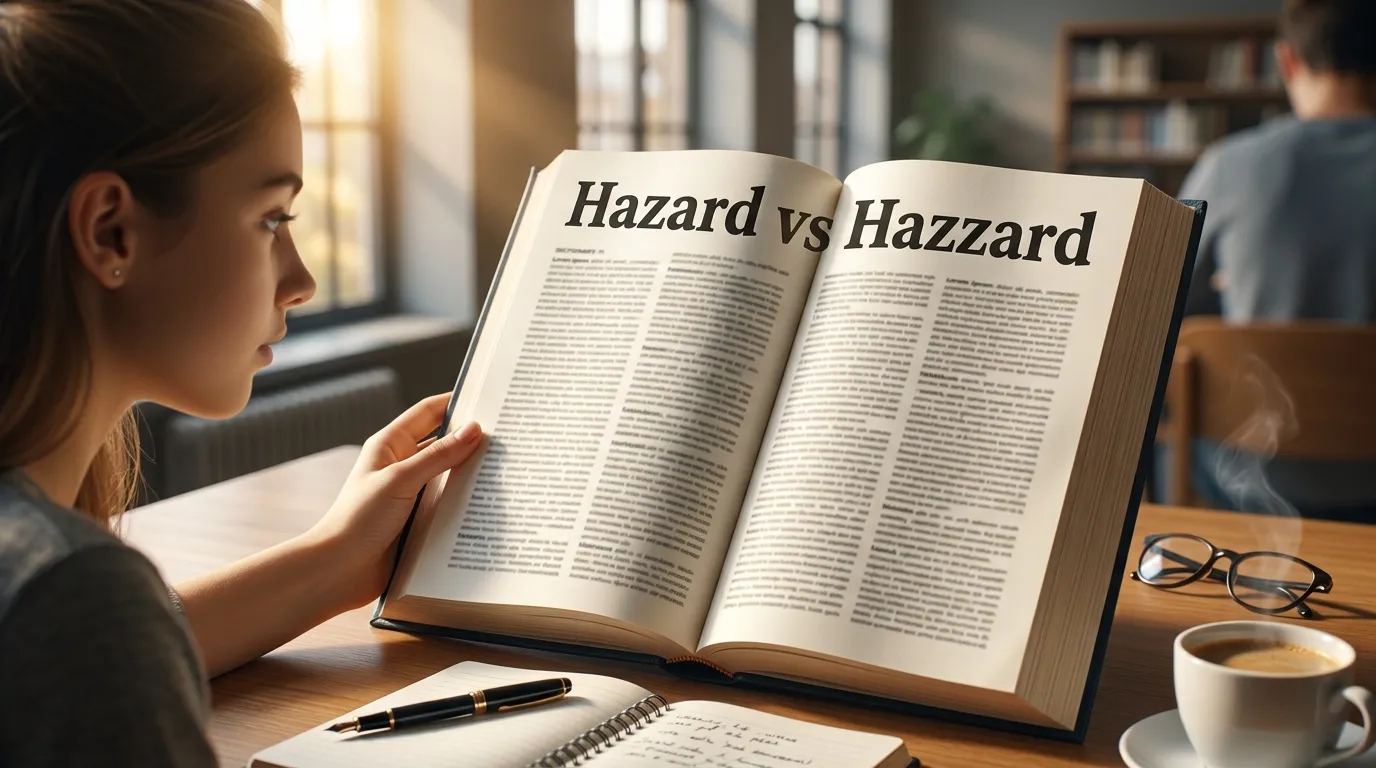
The correct spelling is hazard. Hazzard is generally a misspelling when you mean a danger, risk, or source of possible harm. In this guide, we will explain hazard vs hazzard, their meanings, correct usage, examples, common mistakes, and a simple trick to help you remember the spelling.
Quick Answer:
Hazard is the correct standard English spelling.
Hazzard is usually an incorrect spelling of hazard and should not be used when referring to danger or risk.
| Word | Correct? | Meaning | Example |
| Hazard | ✅ Yes | A danger, risk, or source of harm | Wet floors can be a serious hazard. |
| Hazzard | ❌ Usually no | Common misspelling of “hazard” | ❌ The wet floor is a hazzard. |
Correct: The broken equipment is a safety hazard.
Incorrect: The broken equipment is a safety hazzard.
If you are unsure, remember: hazard has only one “z.”
What Does Hazard Mean?
The noun hazard refers to something that can cause harm, injury, damage, or danger. It is commonly used when discussing workplace safety, health and safety, roads, construction, the environment, and everyday risks.
For example:
- A wet floor is a hazard because someone could slip.
- Loose electrical wires can create a serious hazard.
- Heavy fog can be a driving hazard.
- Chemicals may present a health hazard.
- Broken glass is a physical hazard.
The word can also refer to a risk or uncertain situation. In this broader sense, something does not necessarily have to cause harm directly; it may simply create a possibility of danger or loss.
Hazard as a Noun
The most common use of hazard is as a noun.
Examples:
- Fire is a major hazard in crowded buildings.
- The construction site contains several potential hazards.
- Poor visibility is a road hazard.
- Employees should report any workplace hazard immediately.
Hazard as a Verb
Hazard can also be used as a verb, although this usage is less common in everyday modern English.
As a verb, hazard can mean to risk something or to suggest something cautiously.
Examples:
- I would hazard a guess that she is already home.
- He hazarded his reputation by making the claim.
- I would hazard that the project will take another week.
What Does Hazzard Mean?
In standard modern English, hazzard is not the normal spelling of the word meaning danger or risk.
If you intend to say that something is dangerous, the correct spelling is hazard, with one z.
For example:
❌ The chemicals are a serious hazzard.
✅ The chemicals are a serious hazard.
The extra z is an understandable spelling mistake because English has many words in which consonants are doubled. However, hazard does not follow that pattern.
Is Hazzard Ever a Word?
You may occasionally encounter Hazzard as a proper name, surname, fictional name, or part of a title. A well-known example is The Dukes of Hazzard, where Hazzard is intentionally spelled with two “z” letters as part of the proper name.
That special use does not make hazzard the standard spelling of the common noun hazard.
So, when you mean danger, risk, or potential harm, use hazard.
Hazard vs Hazzard: Key Difference
The main difference is simple:
Hazard = correct spelling for danger or risk
Hazzard = usually a spelling mistake, except in certain proper names
The pronunciation does not provide a useful clue because both spellings may look as though they would be pronounced similarly. This is why remembering the written form is important.
Think of it this way:
Hazard has one Z because the correct spelling does not need an extra one.
Common Examples of Hazard
Here are some natural examples showing how hazard works in everyday English.
Workplace Safety
- Wet surfaces can become a serious hazard for employees.
- Workers must be trained to identify potential safety hazards.
- Exposed wires are an electrical hazard.
Driving and Transportation
- Heavy rain can create a dangerous driving hazard.
- Ice on the road is a major winter hazard.
- Poor road conditions may increase the risk of traffic accidents.
Health and Environment
- Air pollution can be a significant health hazard.
- Certain chemicals pose an environmental hazard.
- Excessive exposure to sunlight can be a health hazard.
Everyday Situations
- A loose carpet can become a tripping hazard.
- The broken stairs are an obvious hazard.
- Leaving toys on the floor can create a hazard for young children.
Hazard Synonyms and Related Words
Understanding related vocabulary can make the meaning of hazard even clearer.
Common synonyms include:
- Danger
- Risk
- Threat
- Peril
- Menace
- Jeopardy
- Potential harm
- Safety risk
However, these words are not always interchangeable in every sentence.
For example, hazard often describes a specific source or condition that could cause harm:
A wet floor is a hazard.
Risk, on the other hand, often focuses more on the possibility or likelihood of harm:
There is a risk of slipping on the wet floor.
This distinction is especially useful in workplace safety and technical writing.
Hazard vs Risk: Are They the Same?
Although hazard and risk are closely related, they do not mean exactly the same thing.
A hazard is something that has the potential to cause harm.
A risk is the possibility or likelihood that the hazard will actually cause harm, often considered together with the potential severity of the outcome.
For example, a wet floor is a hazard. The possibility that someone will slip and become injured represents the risk.
This distinction is frequently used in occupational health and safety, construction, engineering, and environmental discussions.
Common Mistakes With Hazard
Even people who know the meaning of the word sometimes make spelling mistakes.
Mistake 1: Adding an Extra Z
❌ Hazzard
✅ Hazard
This is the most common mistake in the hazard vs hazzard spelling question.
Mistake 2: Using Hazard When You Mean Risk
Although the words are related, they are not always identical.
❌ The probability of injury is the hazard.
✅ The probability of injury is the risk.
A dangerous object or condition can be the hazard, while the possibility of harm associated with it is the risk.
Mistake 3: Assuming British and American English Spell It Differently
Some English words have different spellings in American and British English. However, hazard is spelled the same way in both varieties.
American English: hazard
British English: hazard
There is no standard American/British spelling difference that changes hazard into hazzard.
American English vs British English: Hazard
Unlike words such as color/colour or center/centre, hazard does not have a standard spelling variation between American and British English.
| English variety | Correct spelling |
| American English | hazard |
| British English | hazard |
| Canadian English | hazard |
| Australian English | hazard |
So whether you are writing for a U.S. audience, a British audience, or an international English-speaking audience, hazard is the safe choice.
How to Remember the Correct Spelling
A simple memory trick can help.
Remember: Hazard = One Z
Picture the word like this:
HA + ZARD
There is only one Z.
You can also connect it with the phrase:
“One Z = no problem.”
Whenever you are writing about danger, safety, or risk, check whether you accidentally added another z.
If you see hazzard in an ordinary sentence about danger, stop and ask yourself:
“Am I talking about a proper name, or do I mean hazard?”
In almost every ordinary situation, hazard is the spelling you need.
Why Correct Spelling Matters
A spelling error such as hazzard may seem minor, but accuracy matters when your writing is being used professionally.
For example, safety instructions, workplace policies, warning signs, educational materials, technical reports, and business documents should use standard spelling. A misspelled safety term can make otherwise reliable information look careless.
Correct spelling also helps readers understand your message quickly and makes your writing appear more polished and trustworthy.
Frequently Asked Questions
Is hazard or hazzard correct?
Hazard is the correct standard spelling when you mean danger, risk, or something that could cause harm. Hazzard is normally a misspelling.
Is hazzard a real word?
Hazzard can appear as a proper name or in a title, but it is not the standard spelling of the common English word meaning danger. For that meaning, use hazard.
What is the plural of hazard?
The plural is hazards.
Example:
The safety inspector identified several hazards.
Does hazard have one Z or two?
Hazard has one Z. The correct spelling is H-A-Z-A-R-D.
Is hazard spelled differently in British English?
No. Hazard is spelled the same way in British and American English.
What is a simple synonym for hazard?
Common synonyms include danger, risk, threat, peril, and menace, although the best synonym depends on the context.
What is an example of a hazard?
A wet floor is a simple example of a hazard because it can cause someone to slip and become injured.
Why do people spell hazard as hazzard?
The mistake probably comes from treating hazard like English words that use doubled consonants. The pronunciation can also make the spelling less obvious. The easiest solution is to remember that hazard contains only one z.
Final Summary
When comparing hazard vs hazzard, there is a clear winner: hazard is the correct standard English spelling for something that presents danger, risk, or potential harm.
You can use it when discussing workplace safety, road conditions, health concerns, environmental dangers, or everyday situations. The word can also be used as a verb in expressions such as “hazard a guess.”
Hazzard should generally be avoided when you mean danger. It may appear intentionally in a proper name or title, but that is different from the ordinary English word. There is also no American-versus-British spelling difference here both varieties use hazard.
Actionable Takeaway
Before publishing or submitting your writing, remember this simple rule:
Danger = HAZARD ✅
HAZZARD = Usually incorrect ❌
If you are writing about a safety hazard, health hazard, workplace hazard, or potential danger, use hazard with just one Z. This small spelling detail can make your writing clearer, more professional, and more trustworthy.

Aaron Adam is the Administrator of SpellExact, dedicated to helping readers improve their spelling and writing accuracy. He oversees content quality, ensures reliable language resources, and works to make spelling guidance simple, practical, and accessible for everyone.